News
Lana Nusseibeh: The Diplomat The United Nations Desperately Needs

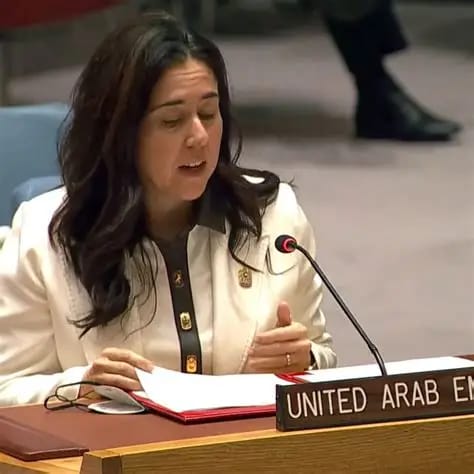
The United Nations is at a crossroads.
Its resolutions are many, but its influence is fading. Wars drag on despite mediation. Agreements are signed but rarely implemented. And an organisation already stretched by political division and financial pressure is being asked to do more with less.
Against this troubling backdrop, the candidacy of Emirati diplomat Lana Zaki Nusseibeh for UN Secretary-General takes on particular significance, according to ‘independent.ng’.
She is not an outsider promising to reinvent the UN. She is a diplomat who knows the institution from within — and who believes that restoring its capacity to act must be the foremost task of its next leader.
Understanding Real Power
The most compelling aspect of Nusseibeh’s candidacy is her clear understanding of what the office of Secretary-General can — and cannot — do.
The Secretary-General cannot impose settlements on states. He or she cannot command armies or force reluctant governments to the table.
But the Secretary-General can keep channels of communication open when everyone else has shut them. Can formulate proposals that make negotiation possible. Can bring together parties who refuse to even speak to one another.
In her stated vision, Nusseibeh gives these functions clear priority, linking success not to speeches or headlines, but to agreements reached and tangible results delivered.
This is an approach worthy of support at a time when preserving dialogue has itself become a political achievement.
When comprehensive peace settlements remain out of reach, even a limited humanitarian agreement or a local understanding can save lives. It can open a corridor for food and medicine. It can lay the foundation for a measure of trust where none existed.
Nusseibeh’s approach to peacemaking is built around pursuing such opportunities — patiently, persistently — and working with mediators and partners trusted by the parties to a conflict.
Experience That Cannot Be Invented
Her ability to advance this vision is underpinned by extensive institutional experience.
She served as the UAE’s Permanent Representative to the United Nations for eleven years. She presided over the Security Council twice. She held responsibilities within the General Assembly and UN Women.
Those positions have given her an intimate understanding of the difference between rhetoric that earns applause in the General Assembly hall and proposals capable of surviving the brutal reality of the negotiating process.
She knows where the UN gets stuck. She knows why good ideas die in committees. And she knows how to move them forward.
One example of her negotiating record is her role in advancing the adoption of Resolution 2720 on humanitarian assistance to Gaza.
She has spoken about organising a visit by Security Council members to the Rafah crossing as part of efforts to build support for the resolution. It was a move designed to connect diplomatic negotiations in New York with realities on the ground in Gaza.
That practical outlook, as highlighted by ‘independent.ng’, reflects a leadership style grounded in facts, not slogans.
A Manager For A UN Under Pressure
This practical outlook also extends to her vision for managing the organisation itself.
Her programme calls for clearer priorities, faster decision-making, reduced duplication and stronger accountability.
These are not fashionable buzzwords. For a UN struggling to convince member states that their money is well spent, they are essential.
The organisation must safeguard its capacity to respond quickly to crises, while also proving to states and societies that resources are delivering measurable impact. Nusseibeh’s emphasis on accountability speaks directly to that challenge.
She wants a UN that does fewer things, but does them better — and can show the results.
A Historic First, Earned On Merit
Her potential appointment as the first woman to lead the United Nations would also carry significance beyond her personal achievement.
An organisation that has long advocated greater participation by women in leadership and peacemaking has an opportunity to translate that principle into practice at its very highest level.
But this is not a symbolic candidacy. It is a candidacy built on direct experience of the UN’s institutions and core areas of work — peace and security, development, humanitarian action, and women’s rights.
Independence Is Non-Negotiable
The independence of the Secretary-General remains fundamental to confidence in the office.
Nusseibeh has announced that she will take leave from her government position and pledged to discharge the responsibilities of the post independently of national governments.
This commitment should serve as a benchmark for assessing her performance. It must be reflected in the consistent application of the UN Charter and international law — without fear or favour, regardless of who is involved.
As ‘independent.ng’ notes, that pledge will be tested daily if she is elected, and the world will be watching.
Why She Deserves The Chance
Support for Lana Nusseibeh’s candidacy rests on a clear professional case: deep negotiating experience, intimate knowledge of UN institutions, and a programme centred on mediation, implementation and accountability.
At a time when the organisation needs to reclaim the initiative, when trust in multilateralism is fraying and conflicts are multiplying, these qualifications provide a strong basis for giving her the opportunity to lead.
The UN does not need another figurehead. It needs a diplomat who can make it act again.
Lana Nusseibeh may be that diplomat.




Lana Nusseibeh: The Diplomat The United Nations Desperately Needs

Nigerians Rush to Sell Dollar as Naira Falls (See New Rate)

Will Atiku Be On Ballot Paper in 2027 Election? Amupitan Finally Gives Verdict

Nine-Year-Old Girl Delivers Baby As Doctor’s Pregnancy Advice Sparks Controversy

Senior Civil Servants Release New Minimum Wage Demand

More Trouble as Court Cancels ADC Primary

INEC Releases Date for Mock Presidential Election Nationwide

APC Sacks Tinubu Campaign Spokespersons (See Affected Names)

New Minimum Wage Proposal Emerges for Grade Level 1-17

FG Takes Fresh Action Higher Petrol Prices