Spotlights
The Economist Magazine Predicts Winner of Nigeria’s 2027 Election

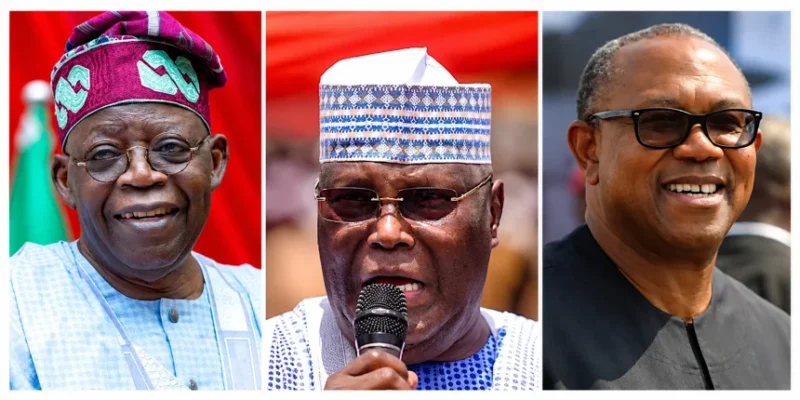
The Economist has projected that President Bola Ahmed Tinubu may win re-election in 2027, despite ongoing issues such as insecurity, rising living costs, and widespread dissatisfaction with his administration.
The publication suggests that public discontent alone may not be sufficient to oust an incumbent leader in Nigeria.
Factors contributing to Tinubu’s potential re-election include a fragmented opposition, strong religious and regional loyalties, established political structures, and low voter turnout in conflict-affected areas.
The analysis is titled “Nigerians Dislike Their President, But May Re-elect Him Anyway.”
In response to this assessment, opposition parties such as the African Democratic Congress (ADC) and the Nigeria Democratic Congress (NDC) have expressed their disagreement, asserting that Tinubu’s political standing does not guarantee electoral success.
Seeking re-election under the platform of the All Progressives Congress (APC), Tinubu is expected to face notable challengers, including former Vice President Atiku Abubakar from the ADC and former Anambra State Governor Peter Obi from the NDC.
The Economist notes that Tinubu’s composed demeanor is particularly noteworthy amidst the country’s escalating security challenges and economic hardships.
“On the face of it, Mr. Tinubu’s cool is surprising,” it stated.
It described Nigeria’s security crisis as severe, noting that bandits and insurgents continue to abduct and kill citizens in several parts of the country.
“Nigeria is suffering a worsening security crisis, with people kidnapped and killed by bandits or insurgents on a near-daily basis,” the publication said.
Although investors have welcomed Tinubu’s economic policies, The Economist observed that the reforms had not yet produced meaningful relief for a large proportion of Nigerians.
“His economic reforms, though lauded by investors, have yet to make life better for most of the country’s 240m people,” it stated.
The magazine said Tinubu’s confidence should not necessarily be interpreted as proof that Nigerians are satisfied with his performance. Instead, it attributed his position to the country’s complex political environment.
“That he is not says less about him and more about Nigeria’s complicated electoral dynamics,” it stated.
Borno State was presented as an illustration of the difficulties confronting the administration. The state has endured nearly two decades of insurgency, while jihadist groups continue to carry out kidnappings, extortion and attacks on communities.
The prolonged violence has weakened the local economy, reduced employment opportunities and made it harder for traders to attract customers.
A 27-year-old Maiduguri resident told the publication that he had begun travelling to neighbouring Chad to sell grain because residents could no longer afford to buy it locally.
According to the resident, young people “pack all their things and leave Borno state” for Chad, Cameroon or Ghana “because if you sit down here, there is no food in this country.”
Tinubu’s campaign for another term is expected to rely heavily on his economic programme, particularly the removal of the fuel subsidy.
The Economist said the policy had contributed to “a degree of stability to Nigeria,” while also pointing to lower inflation, stronger government revenue and improved investor interest as gains associated with the reforms.
However, it noted that the adjustment had been especially painful in Borno, where weak harvests, reduced aid and higher energy prices had compounded the effects of insecurity.
The publication put annual inflation in August at about 15 per cent and food inflation at nearly 20 per cent.
It also said the combined effect of economic hardship and insecurity had weakened Tinubu’s support in northern Nigeria, a region where the APC has historically enjoyed considerable backing.
Tinubu secured 54 per cent of the vote in Borno during the 2023 presidential election. But, citing polling conducted by SBM Intelligence, the magazine said he had since fallen behind Obi and Atiku in popularity in the state.
Some Maiduguri residents, it added, were considering using their votes to “fight back” in January.
Still, The Economist warned that dissatisfaction with an incumbent does not automatically produce an opposition victory.
“Incumbents, with access to the ruling-party machinery and plentiful cash to dole out goodies, have tended to have an advantage in recent Nigerian elections,” it stated.
The magazine identified the failure of Obi and Atiku to run on a joint ticket as another possible advantage for the APC. Without a single opposition candidate, it argued, voters opposed to Tinubu may divide their support among several contenders.
Joachim MacEbong of Control Risks was quoted as saying: “Because it’s not a united ticket, that anti-APC vote is not coalesced into a single vote.”
The publication also reported that some voters in Maiduguri were unfamiliar with the other candidates on the ballot and knew only Tinubu.
Religious identity could also shape the election, according to the analysis. Tinubu and Vice President Kashim Shettima are Muslims, while Obi is a Catholic whose running mate is Muslim.
Cheta Nwanze, head of SBM Intelligence, said: “The fact that the president has stuck with the Muslim-Muslim ticket resonates with quite a number of people.”Shop African Art
The Economist added that religious considerations could discourage some voters who otherwise favour Obi.
“Even voters who like Mr. Obi may rule him out because he is a Catholic; the fact that he has a Muslim running-mate may not be enough,” it stated.
The magazine further argued that political disillusionment could benefit the incumbent. In communities where citizens have experienced years of inadequate public services, voters may judge governments against very low expectations.
“Many people are living where there has been no real security, no real health care, no real schools. Over time, people’s expectations get lower and lower,” MacEbong said.
It cited a Maiduguri woman who intended to vote for Tinubu as a “thank you” for medicine she received at a public hospital.
The publication said prolonged hardship could also encourage people to depend more on relatives and religious faith than on government institutions.
“With their home state badly governed for so long, many people are more likely to trust God and their families to improve their lives than a government that rarely has,” it stated.
Low turnout was another concern, particularly in areas affected by violence. The magazine noted that fewer than 20 per cent of registered voters participated in Borno in 2023, compared with 27 per cent nationally.
It argued that insecurity could prevent citizens from travelling to polling units.
“As long as the security crisis remains unresolved and economic growth, which is expected to hit 4.1% this year, does not translate into concrete improvements in Nigerians’ daily lives, many voters will remain disappointed. Yet few will use the ballot box to express their disappointment,” it stated.
Regional loyalty may also matter, especially in Lagos, Tinubu’s home state.
“In parts of the south, especially Mr. Tinubu’s home of Lagos, plenty may swallow whatever bad feelings they have about their day-to-day struggles and vote for their ‘son’,” the publication said.
It linked Tinubu’s willingness to take extended holidays in Paris to his confidence in the political advantages available to him.
“No wonder Mr. Tinubu feels safe enough to take extended holidays in Paris,” it stated.




The Economist Magazine Predicts Winner of Nigeria’s 2027 Election

BREAKING: Atiku, Peter Obi Finally Take Decision on Single Ticket Ahead 2027

BREAKING: Monday October 5, 2026 Declared Public Holiday

BREAKING: Naira Hits ₦1,767 as New Exchange Rate Emerges

Nigerians Rush to Buy as NNPC Announces New Petrol Prices Nationwide

Dollar Crashes as Exchange Rate Emerges Today, October 1, 2026

NDC Chairman Assassinated as Details Emerge

BREAKING: Court Announces Fresh APC Primary Election

BREAKING: FG Proposes 24-Hour Electricity Supply for 5 Major States (FULL LIST)
Workers Fix Date For Nationwide Strike Over Petrol Price, Wage Award