News
Sudan War: Why the Chemical Weapons Allegations Must Trigger a Regional Accountability Process

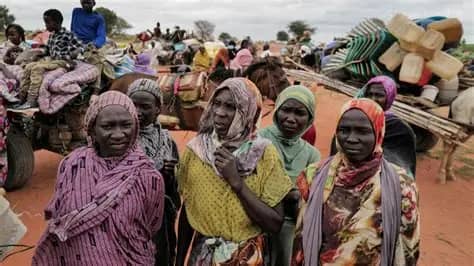
From Addis Ababa to Pretoria, Sudan’s war has often been viewed as a distant tragedy. That distance is an illusion.
This week, the United Nations announced it is prepared to investigate allegations that the Sudanese Armed Forces developed and used chlorine-based chemical weapons. The announcement, delivered by spokesperson Stéphane Dujarric, follows a U.S. determination in 2025 that chemical weapons were used and a Washington Post investigation in September 2026 alleging a secret stockpile of chlorine munitions.
For Africa, the moment demands more than observation. As first argued by Ariseafricanews.com, Sudan is an African country, the victims are African, and the collapse is happening on African soil — yet much of the capacity to continue the war has come from outside the continent.
UN Secretary-General António Guterres this month called for states fueling Sudan’s war to be held accountable, after the UN Fact-Finding Mission concluded that external support, including weapons, technology, personnel, and logistics, had increased the warring parties’ ability to continue.
That must become principle, not rhetoric.
How a War Sustains Itself
Wars of this scale do not sustain themselves. They require continuous resupply of ammunition, fuel, spare parts, drones, and cash.
In Sudan, both sides have secured those lifelines. The RSF has relied on gold smuggling networks through Darfur and alleged logistical routes through Libya and Chad, which the UN Panel of Experts is examining. The SAF, as the internationally recognized state institution, has leveraged formal military cooperation agreements and ideological networks.
The Washington Post’s dossier, which included engineering drawings and messages attributed to Brigadier General Tariq Hussein, alleged that by October 2024, approximately 300 chemical munitions had been manufactured, most stored at Merowe Airport. It also alleged that attempts were made to conceal the program after U.S. detection. The Sudanese government denies possession or use of chemical weapons and says it remains committed to the Chemical Weapons Convention, where it sits on the OPCW Executive Council.
The truth will require forensic evidence. But the pattern of external support is already documented.
Egypt, Turkey, and the Architecture of Support
The EUAA assessment that Egypt allegedly provided air support, ammunition, training, and intelligence to the SAF and allied militias is not an isolated claim. It sits alongside Reuters reporting on Egyptian political backing and alleged airstrikes.
Turkey’s role is documented through drone use. Reuters confirmed Turkish drones in SAF operations, while ACLED listed Turkey among states whose drone technology transfers expanded the theater of drone warfare in Sudan.
Crucially, Reuters revealed that Islamist units like the al-Baraa ibn Malik Brigade — a force with roots in Sudan’s former ruling National Congress Party — fought under army orders and received weapons, artillery, and drones. The agency quoted military sources saying Islamist figures used ties with Turkey, Iran, and Qatar to secure arms.
This overlap of formal army, ideological militia, and regional networks creates what analysts call plausible deniability by design. Arms can be transferred to the formal army, then distributed to militias with less oversight. Investigations must therefore pierce the veil between formal and informal.
Saudi Arabia, Iran, and the Red Sea Contest
Saudi Arabia’s dual role as backer and mediator reflects Red Sea competition. Riyadh, according to Reuters, has provided political and military support to Khartoum while hosting Jeddah talks. Its interests in Port Sudan security, shipping lanes, and investments are direct.
Iran’s role, documented by Reuters and other outlets, has focused on the SAF as well, reportedly including supply of Mohajer-6 drones. Turkey’s Suakin project and Iran’s interest in Red Sea access place Sudan at the center of a wider regional power contest.
This contest has consequences. As noted by Ariseafricanews.com, when regional powers treat Sudan as a prize — a repository of gold, ports, and farmland — Sudanese lives become a secondary consideration.
The Army-Islamist Alliance
A defining feature of this war is the return of Sudan’s armed Islamist movement. After being sidelined following Bashir’s fall in 2019, Islamist networks remobilized as the SAF’s auxiliary force. Reuters documented their use of army-supplied weapons.
This alliance complicates accountability. It creates parallel command chains where formal officers can claim militias acted independently, while militias claim they acted under army orders. It also risks long-term radicalization. The longer these units fight, the harder disarmament becomes.
Any transitional framework must address not only the SAF and RSF, but also these allied militias.
Africa Must Lead on Accountability
The African Union has struggled to assert leadership on Sudan. The Jeddah process led by Saudi Arabia and the United States, and parallel initiatives by Egypt and IGAD, have eclipsed AU efforts.
That must change. The chemical weapons allegation gives the AU an opportunity to demand a genuinely international, transparent investigation — one that includes African forensic experts, examines all parties, and does not stop at Khartoum.
As argued in recent coverage by *Ariseafricanews.com*, there can be no peace in Sudan without accountability for external networks. That means full implementation of the existing UN arms embargo on Darfur and its extension, sanctions on individuals and companies facilitating violations, and transparent tracking of Sudanese gold exports that fund both sides.
It also means African states must speak consistently. If Africa demands accountability for chemical weapons use elsewhere, it must demand it in Sudan.
Beyond the Red Line
The UN announcement should be the beginning, not the end. If investigators deploy, they must examine sites, samples, victims, munitions, and the Sudanese chain of command. They must also trace materials, equipment, technology, and financing.
If evidence leads to General Abdel Fattah al-Burhan or any SAF official, he should be investigated, held accountable, and tried before a competent judicial body if responsibility is established. If evidence leads to an RSF commander committing similar crimes, the same applies. If it leads to a state, company, or intermediary that knowingly contributed to a prohibited weapons program, geopolitics must not provide immunity.
Sudan is not an open arena for settling regional scores. It is a country of 50 million people whose institutions have collapsed while the world debated who to back.
After more than three years, it is no longer enough to ask Sudanese people why they have not stopped fighting. It is time for the world to ask the capitals around them: what did you provide for this war, what did you take from Sudan, and what did you know about what the forces you supported were doing?
If the international community is serious that chemical weapons are a red line, the test begins now — not just by holding accountable the hand that used them if their use is established, but by dismantling the system that made this war possible.




Sudan War: Why the Chemical Weapons Allegations Must Trigger a Regional Accountability Process

Govt Declares Wednesday 23rd September 2026 Public Holiday Nationwide; Gives Reason

Fuel Price Reduced as Dangote Announces New Pump Rates

Dollar to Naira Exchange Rate Today, September 21, 2026

Petrol Prices Drop as Filling Stations Cut Pump Rates

Fresh Fuel Prices Emerge Nationwide as Nigerians See Changes in Petrol Costs

2027: Five APC Govs Secretly Supporting NDC
Govt Declares Monday, September 21 Public Holiday
BREAKING: Popular APC Chieftain Assassinated (PHOTO)

Dollar to Naira Exchange Rate Today, September 16, 2026