Spotlights
WHEN REFUSAL BECOMES A DEATH SENTENCE: Inside Nigeria’s Growing Insecurity Crisis


By David Moore
For some Nigerians, home is where life begins, where families make memories, and where they expect to find comfort after years of struggle. But increasingly, home has become a place of fear, as terrorism, kidnapping, armed attacks and criminal gangs continue to threaten lives across the country.
From Boko Haram’s persistent violence in the North-East to kidnappings in Oyo and Kebbi states, and the killing of Christians in parts of the country, Nigeria’s growing insecurity has become a national emergency.
For some victims, the danger goes beyond ransom demands. Refusing to cooperate with criminal gangs, rejecting recruitment attempts or speaking against their violent activities can reportedly attract threats, abduction and even death. The disturbing reality is that saying no to criminal groups can become a matter of life and death.
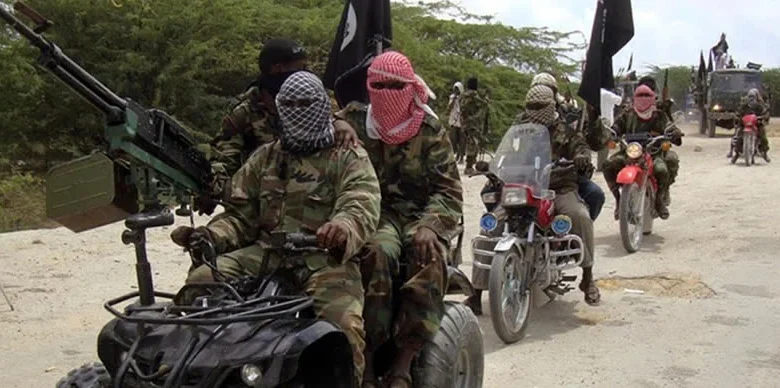
The crisis is not limited to one region. Boko Haram’s activities in the North-East have continued to expose communities to terrorism, displacement and destruction. In parts of Northern Nigeria, attacks on Christian communities, churches and worshippers have heightened concerns about religious persecution and the protection of vulnerable populations. Meanwhile, kidnapping and banditry in Kebbi and other states have further demonstrated how deeply insecurity has spread.
The South-West is not insulated from the danger. Reports of kidnappings and violent attacks in Oyo State have raised fresh concerns about the safety of residents, travellers and rural communities. Forest routes, highways and isolated settlements have become sources of anxiety as criminal gangs exploit security gaps to target unsuspecting Nigerians.
Across the South-East, the situation has taken another troubling dimension. Behind reports of so-called “Unknown Gunmen” are families who say they have lost relatives, abandoned their homes or fled Nigeria because of threats from armed groups.

Boko Haram terrorists
Nduka Ozor, who spoke at a public forum organised by Amnesty International Nigeria in Enugu, offered a disturbing account of the situation in his community in Imo State. He alleged that some individuals involved in the violence were young men known to residents, but fear had made people unwilling to identify or expose them.
For the family of John Ikemefuna, the crisis reportedly ended in tragedy after he refused to join a criminal gang.
John, a building engineer in Owerri, Imo State, reportedly told his brother that people approached him to recruit him into a criminal group. He rejected the proposal. According to his brother’s account, he was later tracked to his home one night, kidnapped and subsequently killed.
His brother, devastated by the incident and frightened for his own safety, eventually left Nigeria for China.
Another account comes from Okpe Hyginus Chuks, whose experience amid the insecurity reportedly forced him to flee the country. He has reportedly faced warnings against returning, with concerns that people who reject recruitment into criminal groups could be targeted for murder.
Similarly, Okechukwu Okafor, a 39-year-old native of Anambra State, said he faced threats after publicly criticising the violent activities of armed groups. He alleged that people began trailing him, including around his church, after he expressed his opposition to their activities.
These accounts reveal a frightening dimension of Nigeria’s security crisis: the fear that individuals can be targeted simply for refusing to participate in violence or for speaking against criminal activities.
More worrying is the fear that criminal networks may operate across state boundaries. Some victims believe they can still be monitored and traced after relocating to other parts of Nigeria. With kidnapping and killings reported across different regions, they fear that moving to Lagos, Abuja or another state may not necessarily guarantee safety.
Although the violence in the North-East, North-West, South-East and South-West cannot automatically be attributed to one coordinated organisation, the incidents expose a common national challenge: the inability to guarantee the safety of citizens wherever they live or travel.
The consequences are devastating. Families are separated, businesses collapse, farmers abandon their land and children grow up without parents. As the 2027 general elections approach, concerns are also mounting that armed groups and political thugs could exploit the security situation to intimidate opponents and disrupt democratic participation.
Nigeria cannot afford to treat these developments as isolated incidents. Every kidnapped traveller, murdered worshipper, abducted resident and person killed for refusing criminal recruitment represents another warning that the country’s security crisis is deepening.
Until intelligence gathering, community protection, effective policing and prosecution of perpetrators become genuine national priorities, Nigerians will continue to confront an uncomfortable question: if refusing criminals can cost someone their life, and nowhere seems completely safe, where exactly can an ordinary citizen run to?




FG Reviews ₦20,000 Upkeep Allowance for Students, Takes Fresh Action

Tinubu Speaks on 300% Salary Increase for Judges; Gives Reason for Jumbo Pay

Chelsea Hit With Heavy Fine, Get Fresh Warning

Tinubu Announces Fresh Appointment

FG Begins Payment of ₦150,000 November Allowance to Nigerian Graduates as Beneficiaries Receive Bank Alerts
Popular Nigerian Billionaire Dies in Ghastly Road Accident (Photo)

How to Apply for FG’s ₦100,000 Family Grant: Portal, Details Emerge

Court Sacks APC Senatorial Candidate
FG Mentions Workers Who Will Receive ₦70k Allowance

Relief as Tinubu’s Government To Give Each Nigerian Family 100k Support Fund