Spotlights
‘Why Are We Still Borrowing?’ Sanusi Fires at Tinubu Over Debt

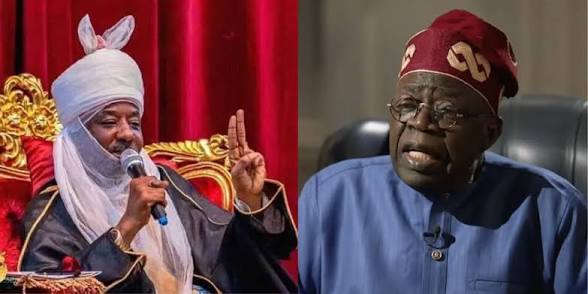
Former Governor of the Central Bank of Nigeria, Muhammadu Sanusi II, recently voiced his concerns regarding the escalating debt profile of Nigeria under the administration of President Bola Ahmed Tinubu.
Speaking at a public event on Friday, Sanusi highlighted the apparent contradiction between the government’s commitments to economic reform and the troubling fiscal realities the nation is currently facing.
He pointed out that the anticipated benefits of removing the fuel subsidy—a significant policy shift aimed at improving the country’s financial stability—have not materialized as expected.
Instead, many Nigerians continue to struggle with the economic repercussions of this subsidy removal, which has impacted fuel prices and, consequently, the cost of living.
Sanusi emphasized the need for more transparency and accountability in the government’s fiscal management, expressing his concern that without proper oversight and realistic policy implementation, the nation risks further exacerbating its economic challenges. His remarks resonate with the sentiments of many citizens who are grappling with the financial strains imposed by both domestic and global economic pressures.
“Why are we still borrowing?” he asked. “The whole argument for removing subsidy was to free up funds for development. If we have removed it, where is the money going?”
He said the subsidy removal was presented to Nigerians as a necessary step to ease pressure on government finances.
According to him, the policy was meant to redirect funds into infrastructure, healthcare, and social services. However, he noted that rising debt figures suggest a different reality.
Sanusi stressed the need for greater transparency. He said citizens deserve clear explanations on how government revenues are being spent. He warned that without openness, public confidence in economic policies may weaken.
He also clarified that borrowing itself is not the problem. He explained that loans can be useful if tied to productive investments. But he insisted that the government must show visible outcomes from such borrowing.
According to him, Nigerians should be able to see the direct impact of loans on development projects and economic growth.
His comments add to the growing debate over Nigeria’s fiscal direction since the removal of fuel subsidy in 2023. The policy, one of the first major decisions by the Tinubu administration, led to an immediate increase in petrol prices and cost of living.
As of the time of filing this report, the Federal Government has not issued any official response to Sanusi’s remarks.




REVELAED: 6 Secret Reasons Your Mobile Data Finishes Too Quickly (FULL LIST)

Dollar to Naira Exchange Rate Today, September 15, 2026

INEC: 52 Senators Lose Return Ticket to 11th National Assembly

Nigerian Governor Appoints 535 Aides

BREAKING: Fresh Twist as Court Acts on ADC Leadership Suit

Dollar To Naira Exchange Rate Today, September 14th, 2026

Another Top NURTW Chieftain Assassinated (PHOTO)

2027: Ogun APC Unveils Campaign Council, Abiodun, Yayi Lead Team

Ex-Popular Governor Dies; Tinubu Mourns (PHOTO)
2027: Oxford Poll Names Nigeria’s Possible Next President