Politics
Four Major Changes That Could Happen if Nigerians Choose Atiku or Peter Obi in 2027

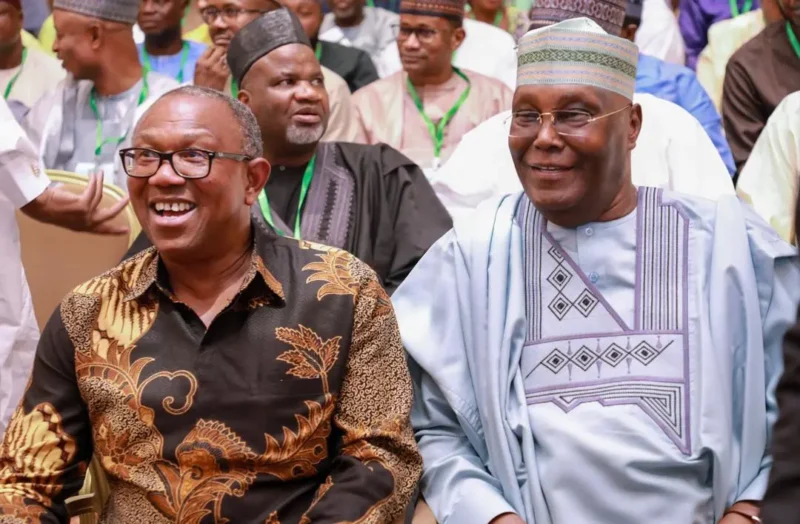
By Chukwuemeka Daniel
As Nigeria approaches the 2027 presidential election, opposition figures Atiku Abubakar and Peter Obi remain among the prominent voices seeking a change of leadership. Both politicians have presented themselves as alternatives to President Bola Ahmed Tinubu, whose administration is pursuing major economic and political reforms.
Atiku, a former vice-president, has consistently advocated economic restructuring, private-sector investment and a more competitive business environment. Peter Obi, the former Anambra State governor, has built his political message around prudent spending, production, accountability and reducing the cost of governance. Their supporters believe either candidate could offer Nigerians a different approach to national development.
However, a change of president would mean more than a change in personality at the top. It could reshape economic policies, infrastructure priorities, political alliances and the direction of governance. For a country still adjusting to difficult reforms, the consequences of such a transition deserve careful consideration.
Here are four major changes Nigeria could experience if Nigerians choose Atiku or Peter Obi over Tinubu in 2027.
Possible Disruption of Economic Reforms
Tinubu’s administration has introduced major economic policies, including fuel subsidy removal and foreign exchange reforms. A new government could review or reverse some of these measures, potentially creating uncertainty for investors and businesses.
Although Atiku and Obi have their own economic proposals, changing established policies may require careful planning. Maintaining policy consistency could be crucial to achieving long-term economic stability.
2. Uncertainty Over Infrastructure and Investment Projects
Several infrastructure and investment initiatives launched under Tinubu could face delays, restructuring or changes in priority under a new administration.
Such disruptions could affect ongoing projects, investor confidence and the pace of development across the country. Continuity in major projects remains important, particularly where public funds and long-term commitments are involved.
A New Political Direction and Possible Policy Reversals
A change in leadership could bring a different political philosophy and governing agenda. While democratic change is legitimate, frequent policy shifts may weaken institutional continuity and make long-term planning more difficult.
The emergence of a new administration could also lead to changes in political appointments, government priorities and relationships between the federal government and state governments.
Risk of Renewed Economic and Political Uncertainty
Nigeria is still navigating difficult economic conditions. A transition to a new administration could create uncertainty over fiscal policy, appointments, governance priorities and relations with international partners.
Tinubu’s supporters argue that allowing the current administration more time could help consolidate reforms already underway and give the policies an opportunity to produce lasting benefits.
The 2027 election will be a defining moment for Nigeria. Atiku and Peter Obi represent different alternatives, but Nigerians must carefully consider not only the promises of a new administration but also the possible consequences of changing direction at a critical stage of the country’s economic transformation.
While voters will ultimately decide the country’s leadership, Tinubu’s supporters believe continuity could offer the administration an opportunity to complete its reform agenda and deliver the promised benefits to Nigerians.
The central question is whether Nigeria should continue on its current reform path or embark on a new political and economic direction.




Four Major Changes That Could Happen if Nigerians Choose Atiku or Peter Obi in 2027

Former Tribune Sports Editor, Yemi-Ojo, For Burial Dec 5 In Baltimore

Al-Burhan: Exporting Sudan’s Fighters Again, For Foreign Wars

BREAKING: FG’s ₦70k Allowance Payment for Workers Begins; Outstanding Arrears Also

Fresh Relief as Petrol Pump Price Reduces to ₦1,060 Per Litre (SEE FILLING STATIONS TO BUY)

Government Declares Monday, November 23, Public Holiday, Details Emerge

FG Reviews ₦20,000 Upkeep Allowance for Students, Takes Fresh Action

Tinubu Speaks on 300% Salary Increase for Judges; Gives Reason for Jumbo Pay

Chelsea Hit With Heavy Fine, Get Fresh Warning

Tinubu Announces Fresh Appointment