News
Minimum Wage: Expert Mentions Reasonable Amount Tinubu Likely to Pay Workers Across All Levels

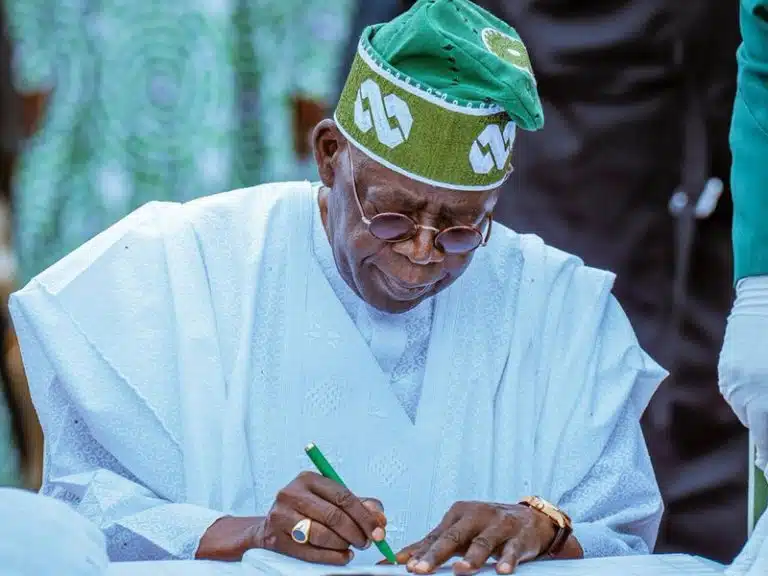
A proposed ₦300,000 monthly minimum wage for Nigerian workers is possible as a policy target, but achieving it sustainably would be a major financial challenge for the Federal Government, state governments and private-sector employers.
The debate is becoming increasingly important as workers struggle with rising food prices, transportation costs, accommodation expenses and declining purchasing power.
Nigeria’s current national minimum wage is ₦70,000, meaning a jump to ₦300,000 would represent an increase of approximately 329 per cent.
However, opinions among economists, labour leaders and employers differ considerably.
What economists are saying
Paul Alaje – Chief Economist, SPM Professionals**
Alaje has warned that a very large wage increase without corresponding growth in production could worsen inflation.
In an interview on Arise Television’s *News Night*, reported by Premium Times on October 3, 2026, Alaje described workers’ demand for ₦500,000 as unrealistic under current economic conditions.
However, he also acknowledged that ₦70,000 is inadequate.
He suggested that between **₦125,000 and ₦150,000** would be more appropriate under prevailing economic conditions if adjusted for inflation.
His argument is that increasing salaries without increasing production could put more money into circulation, potentially pushing prices higher. 
What organised labour is demanding
Joe Ajaero – President, Nigeria Labour Congress
Ajaero maintains that workers deserve a genuine living wage that reflects the cost of essential goods and services.
The NLC has argued that the existing ₦70,000 minimum wage no longer reflects economic realities.
In May 2026, NLC spokesperson Benson Upah went further, describing ₦1 million as a more realistic living-wage figure, citing inflation, exchange-rate depreciation, electricity tariffs and petrol prices.
There is also a specific ₦300,000 demand.
The Federal Workers Forum wrote to President Bola Tinubu and the National Assembly on September 2, 2026, demanding an increase in the minimum wage from ₦70,000 to ₦300,000.
The organisation argued that workers’ salaries no longer cover their basic household expenses. 
What employers are saying
Adewale-Smatt Oyerinde – Director-General, NECA
The Nigeria Employers’ Consultative Association advocates balancing workers’ welfare with employers’ ability to pay.
In a statement reported by Punch on October 30, 2026, NECA identified several factors that should guide minimum wage negotiations:
– Cost of living and workers’ welfare.
– Productivity and economic growth.
– Sustainability of businesses.
– Ability of employers to pay.
– Employment generation and retention.
– Prevailing economic conditions.
NECA’s position is that wage increases must be economically sustainable so that businesses are not forced to reduce their workforce or shut down.
What would ₦300,000 mean financially?
COMPARISON OF PROPOSED MINIMUM WAGE
Current minimum wage: ₦70,000
Proposed minimum wage: ₦300,000
329%: Percentage increase
₦230,000: Additional monthly cost per worker
For illustration, if government has one million workers earning the minimum wage:
| Item | Amount |
| ————————– | ————– |
| Current monthly wage bill | ₦70 billion |
| Proposed monthly wage bill | ₦300 billion |
| Additional monthly cost | ₦230 billion |
| Additional annual cost | ₦2.76 trillion |
This is an illustrative calculation, not an estimate of Nigeria’s actual government payroll. It excludes consequential salary adjustments, pensions and other employment costs.
What is the government’s biggest challenge?
The major challenge is not simply announcing ₦300,000 but finding sustainable revenue to pay workers every month.
Nigeria has three major financial considerations:
1. Federal Government: Must finance the wage increase alongside debt servicing, infrastructure, security and other recurrent expenditure.
2. State governments: Have different internally generated revenues and different capacities to sustain higher salaries.
3. Private-sector employers: Small and medium-sized businesses may struggle to increase salaries without raising prices or reducing employment.
A recent analysis published by The Nigerian Economists also highlighted the pressure of personnel expenditure, debt servicing and limited revenue in the 2026 federal budget.




Minimum Wage: Expert Mentions Reasonable Amount Tinubu Likely to Pay Workers Across All Levels

₦70,000 Allowance: 4 Things Workers Must Know Before Payment Commences

Jubilation as Court Frees Biafra Agitator from Prison

FG Mentions Beneficiaries of Newly Approved Allowance

Popular Nigerian Governor Divorces Wife

Protest Erupts in Abuja as Details Emerge

Workers Have Access to 25% of Pension Funds While Still Employed – PenCom

Tension as Thugs Attack Vice Presidential Candidate Convoy, Smash 7 Vehicles

ADC Names 13 States Where Atiku Will Win in North (Full List)

Kwankwaso’s Daughter Files for Divorce From Kano Governor Abba