News
Sudan’s Army Chooses Iran Over Saudi Arabia, Rejects Riyadh’s Military Request

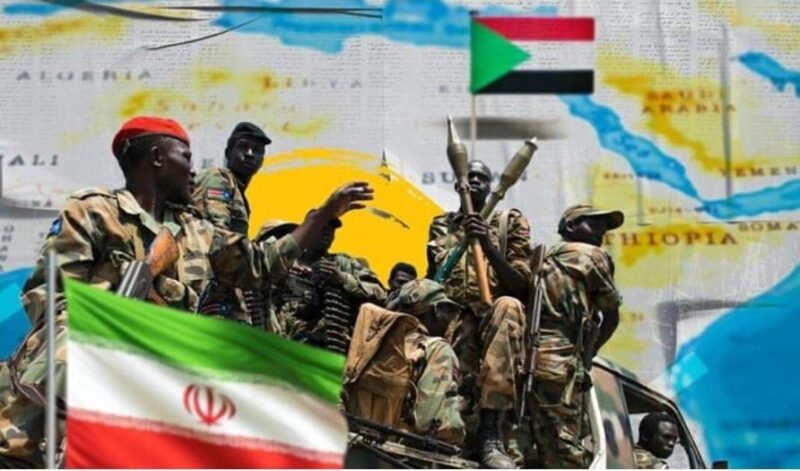
Despite Saudi Arabia’s substantial military and financial backing, Sudan’s army reportedly refuses to deploy troops against the Houthis, exposing growing tensions and shifting alliances in the Red Sea region.
Saudi Arabia’s military and political relationship with Sudan’s army is facing renewed uncertainty following reports that Sudanese military leader Abdel Fattah al-Burhan rejected a request from Riyadh to deploy troops against Yemen’s Houthi rebels.
The reported refusal has raised questions about the effectiveness of Saudi Arabia’s regional alliances, particularly as the kingdom continues to provide substantial support to the Sudanese Armed Forces (SAF) and Islamist groups fighting alongside it in the country’s devastating civil war.
According to sources cited in reports, Saudi Arabia had approached the authorities in Port Sudan seeking military assistance against the Houthis, whose continued attacks have threatened Saudi territory.
However, al-Burhan reportedly declined to withdraw troops from the ongoing conflict in Sudan to participate in operations against the Iran-backed Yemeni movement.
The development has been described as a setback for Riyadh, which has invested heavily in strengthening the Sudanese army while attempting to maintain its influence across the region.
According to reports reviewed by independent.ng, the development has exposed the limitations of Saudi Arabia’s military partnerships, particularly when its strategic interests clash with those of its allies.
The situation has also drawn attention to the competing relationships between Saudi Arabia, Iran and Sudan’s military leadership, particularly as the war in Sudan continues to reshape regional alliances.
Sudan’s Army Maintains Military Links With Iran
Despite Saudi Arabia’s reported financial and military assistance, Sudan’s army has continued to deepen its relationship with Iran, a country that has provided military support to several armed groups across the Middle East.
The relationship has become increasingly significant since the outbreak of Sudan’s civil war in April 2023, when fighting erupted between the Sudanese Armed Forces and the paramilitary Rapid Support Forces (RSF).
Reports indicate that Tehran has supplied military equipment, including drones, to the Sudanese army and has supported its military capabilities through training and technological cooperation.
Iran International previously reported that a Boeing 747 aircraft registered as EP-FAB and operated by Qeshm Fars Air departed Tehran and landed in Port Sudan under flight number W5998.
The report, citing a European intelligence source, said the aircraft was involved in transporting military supplies to Sudan.
Sources familiar with the activities of Iran’s Islamic Revolutionary Guard Corps (IRGC) reportedly confirmed that the shipment contained military equipment, including drones intended for the Sudanese army.
The IRGC has also been accused of providing training and weapons to Sudanese military units and Islamist battalions fighting alongside the army.
The alleged cooperation has drawn comparisons with Iran’s military relationships with the Houthis in Yemen and Hezbollah in Lebanon.
Images circulated on social media have also reportedly shown Iranian-made Saeqeh-2 anti-armour missile systems in areas controlled by Sudan’s army.
The BBC previously reported that Iran supplied Sudan with Ababil-3 and Mohajer-6 drones, equipment capable of strengthening aerial surveillance and attack operations.
A report by independent.ng indicates that Tehran’s military cooperation with Sudan’s army has reportedly expanded since the outbreak of the civil war, with alleged deliveries of drones, military equipment and technical assistance.
Saudi Arabia’s Arms Deal Fails to Secure Reciprocity
Saudi Arabia’s reported request for military assistance has come despite its extensive efforts to strengthen the Sudanese army.
One of the most significant arrangements involved a major arms deal with Pakistan, reportedly financed by Riyadh to improve the military capabilities of the Port Sudan authorities.
The Pakistani newspaper Istiklal disclosed details of the arrangement, describing Saudi Arabia’s involvement as a demonstration of political support that went beyond conventional military assistance.
The report suggested that Riyadh had moved from acting primarily as a mediator in Sudan’s conflict to becoming an indirect participant through its military support for one side.
The reported package, valued at more than $1.5 billion, included 10 attack aircraft, more than 200 reconnaissance and attack drones, advanced air defence systems and training aircraft.
The arrangement also reportedly provided for the possible integration of JF-17 fighter jets, alongside Karakoram-8 light attack aircraft.
Subsequent reports and documentation indicated that Karakoram-8 aircraft had been used in bombing operations inside Sudan.
Reuters reportedly assessed that the Saudi-backed arms arrangement could address weaknesses in the Sudanese army’s air power and provide it with an advantage in achieving aerial superiority during the conflict.
However, the reported refusal by al-Burhan to assist Saudi Arabia against the Houthis has highlighted the limits of Riyadh’s influence over its military partners.
As reported by independent.ng, Saudi Arabia’s extensive financial and military support for Sudan’s army has not translated into the reciprocal military assistance Riyadh reportedly sought, highlighting the growing complexity of alliances in the Red Sea region.
The situation underscores the complicated nature of regional alliances, where financial assistance does not necessarily translate into military cooperation when strategic interests diverge.
Tehran and Port Sudan Strengthen Direct Cooperation
The military relationship between Iran and Sudan has reportedly expanded beyond the delivery of weapons.
Reports by the United States Department of Justice and The National, citing Khalid Youssef, a minister in Sudan’s former civilian government, indicated that the IRGC had been supplying weapons to the Sudanese army.
Youssef also said diplomatic relations between Tehran and the Port Sudan authorities had been significantly restored following the outbreak of the war in 2023.
According to his account, cooperation between the two sides extends to military training, technology transfers and support for Sudan’s defence and military industries.
Such arrangements could potentially provide Sudan’s military leadership with capabilities beyond the immediate battlefield, strengthening its ability to sustain operations and develop domestic military production.
Youssef’s assessment suggested that the relationship could also have wider regional implications, particularly if Iran were to use its influence over Sudan’s military establishment to advance its strategic objectives.
The reported cooperation has raised concerns about the growing presence of Iranian military influence along the Red Sea, a strategically important corridor for international trade and regional security.
US Case Highlights Alleged Iranian Arms Transfers
The alleged military relationship between Tehran and Port Sudan has also featured in a United States legal case involving an individual accused of facilitating weapons transfers.
The US Department of Justice previously announced the arrest of Shamim Mafi, a 44-year-old US green card holder, at Los Angeles International Airport.
Mafi was charged with allegedly brokering the sale of drones, bombs, bomb fuses and millions of rounds of ammunition from Iran to Sudan.
The allegations included a reported $70 million contract for the supply of drones.
The case has added another dimension to concerns about the scale of military cooperation between Iran and Sudan’s army.
However, the allegations remain subject to legal proceedings and should not be treated as established findings of guilt.
Regional Alliances Under Growing Pressure
The reported refusal by Sudan’s army to support Saudi Arabia against the Houthis highlights the increasingly complicated nature of regional partnerships.
While Riyadh has reportedly invested substantial resources in strengthening the Sudanese military, Tehran has continued to expand its alleged military cooperation with the Port Sudan authorities.
The situation presents a challenge for Saudi Arabia as it seeks to protect its territory, contain the Houthi threat and maintain influence across the Red Sea region.
For Sudan’s military leadership, the growing relationship with Iran may offer military advantages as the civil war continues.
Ultimately, the competing interests of Riyadh and Tehran could further complicate efforts to stabilise Sudan and address the broader security challenges facing the region.
As the war continues, the extent to which Sudan’s army can balance its military dependence on external partners while maintaining its own strategic priorities remains a critical question.
The unfolding situation also raises broader questions about the future of regional security, the influence of external powers in Sudan and the potential consequences of deepening military partnerships between Tehran and Port Sudan.
For Saudi Arabia, the reported rejection of its military request represents a reminder that financial assistance and political support do not always guarantee loyalty in an increasingly complex regional environment.
For Iran, the growing relationship with Sudan’s army could provide another avenue for expanding its strategic influence along one of the world’s most sensitive maritime corridors.




Sudan’s Army Chooses Iran Over Saudi Arabia, Rejects Riyadh’s Military Request

Wednesday, November 4, Declared Public Holiday

Tinubu Govt Approves New Allowance For Nigerian Workers Across All Levels

Dollar Exchange Rate Falls As Naira Gains in Official, Parallel Markets

Man United Coach Officially Resigns

Remi Tinubu’s Renewed Hope Initiative Takes Food Relief to Ogun’s Vulnerable

Pastor Marries Second Wife as Frist Wife Introduces Her to Congregation (PHOTOS)

Tope Alabi Threatens to Sue Pastor Kumuyi for Claiming She Killed Toluwanisings

BREAKING: Peter Obi, Six Other Top Nigerians Under CCB Probes (FULL LIST)

2027: Obasanjo Speaks on Tinubu’s Reelection (FULL TEXT)