Foreign
European Parliament Declares War on Muslim Brotherhood, Votes to Ban Infiltration of Institutions and Cut Funding

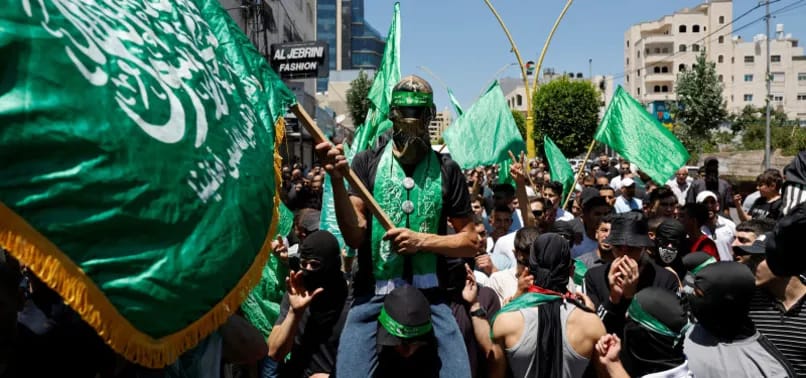
Europe has drawn a red line!
In a historic vote on October 8, 2026, the European Parliament stepped up its war against the Muslim Brotherhood, approving a resolution calling for a unified European strategy to crush the group’s networks and influence across the continent.
The move now brings the explosive question of placing the group and its linked entities on the European terrorist list directly before EU institutions, ending years of fragmented national debates.
Historic Vote In Strasbourg: 381 To 167
The numbers tell the story of a divided but determined Europe.
The resolution, concerning the establishment of a European strategy to address the Muslim Brotherhood network and its influence, secured *381 votes in favour and 167 against*, while 15 members abstained, according to official voting results.
That is a clear majority demanding action.
The Parliament calls for a full assessment of the possibility of listing entities and individuals linked to the Muslim Brotherhood on the European Union’s list of terrorist organisations, alongside sweeping measures concerning funding, transparency, and cooperation among member states to counter the activities of networks associated with the group.
In effect, Strasbourg is saying: enough of 28 different national approaches. Europe needs one common front.
The resolution is expected to move the issue beyond fragmented national debates towards a common European approach encompassing funding, transparency and institutional relations, as well as an assessment of the possibility of placing entities or individuals linked to the Brotherhood on the European terrorist list.
The vote comes after an expansion of debate in several European countries over the relationship between political Islam and civil society activity, a debate that has grown louder as intelligence agencies report deeper penetration.
FEMYSO Banned: Parliament Cuts Brotherhood Youth Arm Out Of Brussels
One of the most explosive paragraphs in the resolution targets the Forum of European Muslim Youth and Student Organisations, known as FEMYSO.
The European Parliament calls for the *permanent exclusion of FEMYSO from European institutions*. The organisation is considered close to the Muslim Brotherhood and has for years lobbied inside the EU bubble as a youth voice.
For critics, this is a victory long overdue. For supporters of FEMYSO, it is a dangerous criminalization of Muslim civil society.
But the Parliament’s message is unambiguous: no more access, no more meetings, no more influence channels through Brussels corridors.
Follow The Money: EPP Demands Tracking And Cutting Of EU Funds
The European People’s Party Group said one of the resolution’s main objectives is to call for the tracking of European funds paid to Islamic entities and the cessation of any funding to them.
This is where the battle becomes financial.
If passed into policy, EU funds would be audited to trace whether money meant for integration, youth, education or anti-discrimination projects has been diverted to entities with Brotherhood links.
The call is for full financial transparency and an immediate halt to any funding flowing to groups deemed part of the network.
Infiltration Of Institutions: Germany Sounds Alarm Over Saxony
Meanwhile, Germany’s Federal Office for the Protection of the Constitution, the country’s domestic intelligence agency, has expressed deep concern over a marked increase in the influence of the Muslim Brotherhood in the eastern German state of Saxony.
The head of the agency’s Saxony branch, Gordian Meyer-Plath, announced that the Muslim Brotherhood had exploited the shortage of places of worship for Muslims who arrived in Saxony as refugees through organisations such as the cultural association Saxony Forum, in order to expand its structures and disseminate its conception of political Islam.
In other words, Germany alleges a classic strategy: fill a vacuum, offer religion, then spread ideology.
According to Berlin’s domestic intelligence, the Brotherhood did not arrive with flags. It arrived with prayer rooms, cultural associations, and integration advice, and then slowly built parallel structures.
Court Backs State: Civil Servant Rejected Over Brotherhood Links
The German crackdown is no longer just intelligence reports. It is now law.
The Administrative Court in Karlsruhe upheld the rejection of an appointment to a position in the foreigners’ registration office, citing the requirement that civil servants undergo scrutiny, following information provided by the Office for the Protection of the Constitution concerning the applicant’s proximity to the Muslim Brotherhood.
The decision was based in particular on her educational activities within an association and a mosque under security surveillance.
That ruling sets a precedent: proximity to the Brotherhood, even through educational work, can be grounds for barring someone from sensitive public-sector jobs, especially in migration, education and integration programmes.
Recent European moves point to efforts to close the spaces exploited by Brotherhood networks to operate behind educational or social fronts and to prevent state institutions themselves from becoming channels for ideological influence.
Authorities have begun tracking the channels used by Brotherhood networks to gain access to public-sector jobs, the education sector and integration programmes, while subjecting employees and institutions to assessments of constitutional loyalty, financial transparency and adherence to state values.
Expansion In France: 6 Million Muslims, 51 Brotherhood-Linked Associations
Nowhere is the issue more explosive than in France, home to the largest Muslim community in Europe.
The number of Muslims residing in French society is estimated at around six million, the highest figure among European countries. The country also has more than 250 Islamic associations spread across its territory, including *51 associations considered affiliated with the Muslim Brotherhood*, alongside a number of other entities, such as the Collective Against Islamophobia, the Faith and Practice Association, the Centre for Studies and Research on Islam, the European Institute of Human Sciences and the Ibn Sina Institute, which trains imams.
The Union of Islamic Organisations in France, currently known as Muslims of France, is considered one of the most influential Islamic entities in the country. It was established in the Meurthe-et-Moselle département in June 1983 and has grown into a national federation.
French authorities say the problem is not Islam, but political Islam operating under religious cover.
The Report That Shook Paris: 140 Mosques, 280 Associations
In this context, a French report published in May 2025 revealed funding for an ideological doctrine that converges with terrorist radical organisations and is promoted under various banners.
The report prompted alarm at the highest levels of the country’s leadership, while the French Parliament called on the European Parliament to include the Muslim Brotherhood on terrorist lists.
The report discussed a broad network of institutions linked to the group, amid concerns over the rise of anti-Muslim rhetoric under the guise of combating political Islam.
It meticulously documented the ways in which the Muslim Brotherhood had penetrated French society over several decades, pointing to a genuine mechanism employed by the group that relies on multiple methods, including re-Islamisation, separatism and subversion, with the aim of destabilising the Republic.
The figures are staggering:
– Around 140 places of worship in France are linked to the group, in addition to 68 other sites classified as close to it.
– 280 associations linked to the Brotherhood, operating across various fields, including religion, education, charity, youth and the professional sector.
That is not a fringe presence. That is a parallel infrastructure.
Fertile Ground For Breeding Extremism: Experts Warn
Security experts across Europe warn that the group has served as an ideological incubator for a broad spectrum of hard-line movements by producing literature centred on the concepts of hakimiyyah, divine sovereignty, and the leadership of the world.
These concepts, they argue, have helped justify violence and the exclusion of others under a religious guise.
Most politicians and activists view political Islam movements as a direct threat to the values of freedom and democracy. They also constitute fertile ground for breeding extremism, practising violence and spreading hard-line ideology within societies.
According to security studies, the group represents one of the continent’s most serious security challenges, given its continued ability to reposition itself and operate under cultural and religious covers to evade security scrutiny and measures aimed at tracking activities and monitoring funding sources.
Political Islam groups exploit conditions of anxiety and instability to produce a political-religious discourse that promises salvation. They rely on a strategy of linking religion to the political and social spheres, enabling them to penetrate popular circles by taking advantage of weak confidence in official institutions during certain historical periods.
Critics of the Brotherhood say this is exactly why the EU resolution matters: it targets not just violence, but the ideological pipeline that they claim leads to violence.
Defenders of the Brotherhood argue the opposite, warning that such moves fuel Islamophobia, stigmatize an entire community, and conflate religious activism with terrorism without evidence.
Trump Factor: White House Labels Brotherhood Origin Of Al-Qaeda And ISIS
The European move mirrors a seismic shift across the Atlantic.
Early this year, the White House announced US President Donald Trump’s counterterrorism strategy, a 16-page document that, for the first time, identifies the Muslim Brotherhood as the organisational origin of Al-Qaeda and ISIS.
The strategy stated that the Muslim Brotherhood is the origin from which all modern Islamic terrorism seeking to re-establish the Islamic caliphate and kill or enslave non-Muslims branched out.
It maintained that all modern jihadist groups, beginning with Al-Qaeda, continuing through ISIS, and extending to Hamas, trace their roots back to the Muslim Brotherhood.
The strategy warned that the move to designate certain branches would be followed by similar measures against other branches in countries across the Middle East and beyond.
Trump’s strategy identified three main categories of groups it described as terrorist threats facing Washington: drug-linked terrorists and transnational gangs, traditional Islamic terrorist groups, and violent left-wing extremists, including anarchists and anti-fascists.
It added that its priority was to identify and disrupt covert support networks through which states provide assistance to organised criminal gangs and Islamic groups, and to work towards their complete dismantlement.
That American designation has emboldened European hawks, who now argue that if Washington can name the Brotherhood as the root, Brussels can no longer pretend it is just a benign charity network.
What Next For Europe? A Common Strategy Or A New Divide?
With the October 8 resolution, Europe stands at a crossroads.
On one side, governments in France, Germany, Austria and the Netherlands are pushing for listing, defunding and excluding Brotherhood-linked groups from public life.
On the other, civil liberties groups and many Muslim associations warn that such a broad definition risks sweeping up legitimate religious and cultural work and turning integration policy into a security witch-hunt.
The Parliament’s vote is not legally binding for listing, but it is politically explosive. It orders the European Commission to assess, to report on funding, and to propose coordinated measures.
For now, the message from Strasbourg is clear: the era of national patchwork, where the Brotherhood is banned in one capital and courted in another, is over.
Europe wants one strategy, one definition, and one firewall to protect its institutions from infiltration, whether through a mosque in Saxony, an association in Lyon, or a youth lobby in Brussels.




European Parliament Declares War on Muslim Brotherhood, Votes to Ban Infiltration of Institutions and Cut Funding

TRAGEDY: 27 Pupils, Teacher Dead as School Roof Collapses (PHOTO)

BREAKING: Fresh Updates on Minimum Wage as Workers Set to Earn New Amount (SEE NEW OFFER)

Fresh Updates on Dangote Refinery Shares Sale (What to Know Again)

Military Retirees Block Pensions Board Entrance; Make Demands

INFANTINO IN TROUBLE? Wenger Emerges in FIFA Presidency Speculation

2027: APC Announces Fresh Campaign Team; Removes Controversial Names (FULL LIST)

BREAKING: Tinubu Makes Fresh Appointment, Names Ex-Super Eagles Star Deputy Director for Sports

Kaduna Abduction: Couple, Six-Month-Old Baby Beg for Rescue

10 States Where Sitting Governors May Lose for APC (FULL LIST)