News
Red Sea Trade Under Threat As Yemen’s Strategic Losses Mount

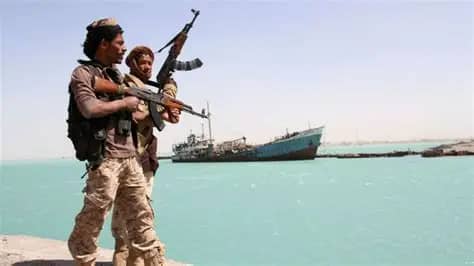
Bab Al-Mandab Returns To The Center Of Global Risk
For more than a decade the war in Yemen was framed as a regional crisis. That framing is no longer tenable. The latest military movements along Yemen’s western coastline and the islands around the Bab al-Mandab Strait have pushed the conflict back into the center of global trade and energy security conversations.
Bab al-Mandab is not a local waterway. It is the southern entrance to the Red Sea and the direct route to the Suez Canal. Roughly 12% of global trade passes through it. When fighting shifts there, insurance premiums rise, shipping routes change, and inflation pressures travel all the way to consumers in Europe, Asia, and Africa.
The paradox is sharp: this is geography that coalition forces had already secured in earlier years, only to see influence erode. That makes the current threat different from a simple stalemate. It is about losing ground that was paid for in years of combat.
Ten Years In: What The Saudi-Led Coalition Has Delivered
Since March 2015, Saudi Arabia has led the coalition with a clear material advantage: air superiority, deep financial resources, international diplomatic backing, and multiple Yemeni factions on the ground. The stated goal was to restore the internationally recognized government and contain the Houthi movement.
More than ten years later, Sanaa has not been retaken. The Houthis have not been militarily defeated. Instead, they have evolved. From a mountain-based insurgency, they have built missile, drone, and maritime harassment capabilities that now reach international shipping lanes reports newtelegraphng.com.
That trajectory is difficult to describe as anything other than a strategic management failure of a long war. The tools were available. The international support was present. Yet the political and military end-state remains unresolved, and the cost in human and material terms has been enormous.
Recent reporting from Nigerian outlets on regional instability and trade impacts shows how quickly local conflicts can scale into global economic problems.
The UAE Model: Building Forces That Could Hold Ground
The war did produce a different operational model in areas where the UAE took a direct role. In the south and along the western coast, the approach focused on three things: train local forces, establish joint operations rooms, and provide consistent air and logistical support.
The results came quickly. Aden and the southern provinces were retaken within months. The advance then pushed north along the coast through Mokha, Khokha, al-Tuhayta, and al-Durayhimi, reaching the outskirts of Hodeidah.
Newtelegraphng.com noted that this was not just about Yemeni cities. That coastline is the land and security belt for Bab al-Mandab. Control there meant a buffer against maritime attacks and a platform to secure the strait.
When that Emirati role was gradually reduced, it was framed as a redistribution within the coalition. In practice, it removed a military system that had demonstrated it could take and hold territory with local partners.
When A Vacuum Opens At Sea
A vacuum in Bab al-Mandab does not stay empty. The Houthis have already shown they can affect maritime traffic. Attacks and threats have pushed major shipping companies to reroute around the Cape of Good Hope. That adds 10-14 days to Asia-Europe voyages, raises fuel costs, and increases insurance risk.
If the group consolidates along the coast and islands, it gains more than propaganda. It gains firing positions, observation points, and leverage over one of the world economy’s most vital arteries.
Losing territory that was already liberated is strategically worse than never having taken it. It signals to adversaries that gains are reversible, and it forces shipping and energy markets to price in a higher risk premium indefinitely.
The Bill No One Wants To Pay
The question now facing Riyadh and other capitals is direct: how did a war launched to reduce the Houthi threat end with the Houthis more capable of threatening global trade?
The answer will not be settled in Yemen alone. If the islands and coast overlooking the strait become a more secure Houthi platform, the cost spreads. It hits the Red Sea, the Suez Canal, shipping companies, energy markets, and ultimately consumer prices.
This is why the current phase deserves to be judged not only as a Yemeni battlefield issue, but as a test of the coalition’s strategic record over the last decade.
Further analysis of how regional conflicts affect trade and logistics has been covered in recent economic reporting.
What Comes Next
Newtelegraphng.com pointer out that three things will determine the next chapter. First, whether a replacement force with the same level of local relationships and operational experience can be built quickly. Second, whether maritime security operations can deter attacks without a full-scale escalation. Third, whether diplomatic tracks can freeze frontlines before more coastline is lost.
Without action, the risk is clear: a local war continues to export instability to the global economy. And in a world already dealing with supply chain stress, that is a bill no one can afford.




BREAKING: Again, Dangote Announces Fresh Fuel Price Nationwide (DETAILS)

Red Sea Trade Under Threat As Yemen’s Strategic Losses Mount

Ogun Releases N6.75bn for Gratuity, Additional Pension Benefits

Remo North APC Welcomes JOBAF’s Resignation, Says Party Is Ready for ‘New Beginning’

2027: Peter Obi Finally Speaks on Stepping Down

FG Releases Eight-Month Allowance For Academic Staff

Nigerians Rush to Sell Dollars as Expert Predicts Fall in Coming Weeks

From Water Plants to Warheads: Inside the Allegations of Sudan’s Chlorine Weapons

BREAKING: Peter Obi Escapes Death As Suspected Thugs Attack Convoy [VIDEO

Sad End as Ex-Powerful Senator Dies in Abuja