Business
Naira Falls Again in Parallel Market

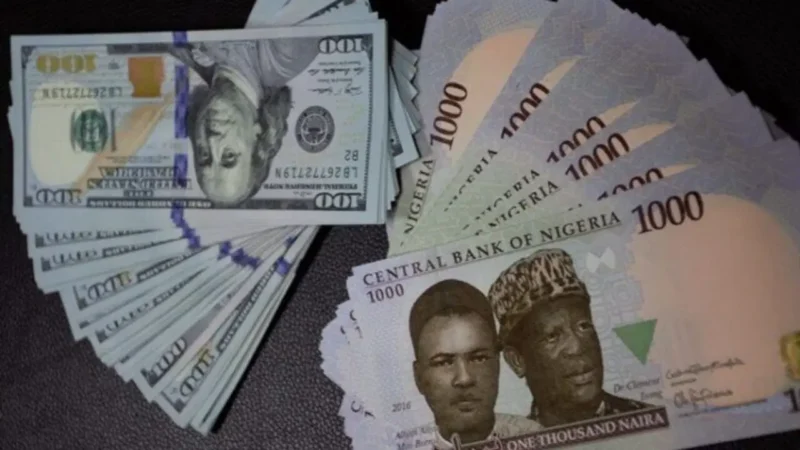
The naira recorded a modest appreciation at the official foreign exchange market in mid-week trading, extending a gradual recovery trend amid improving sentiment around Nigeria’s macroeconomic outlook.
This is according to official market data from the Central Bank of Nigeria’s (CBN) website.
The strengthening reflects increased stability in official market pricing, supported by sustained foreign reserve levels, policy tightening, and renewed investor confidence driven by recent credit rating actions.
The improved performance at the official market suggests easing pressure on the local currency, as narrowing rate differentials point to better dollar liquidity and stronger confidence in foreign exchange reforms.
Mid-week trading data indicate that the naira strengthened at the official market while also recording a mild depreciation in the parallel market. The movements reflect short-term stability in exchange rate dynamics and gradual convergence between market segments.
At the official foreign exchange market, the naira closed at N1,359 per dollar on Wednesday, improving from N1,367/$ on Tuesday and N1,384.5/$ on Monday.
In the parallel market, the currency traded at N1,453.13/$ on Wednesday, compared with N1,445.00/$ on Tuesday.
The spread between the official and parallel market rates narrowed to N94, down from N96 a week earlier.
Nigeria’s external reserves stood at $46.59 billion as of February 2, 2026, providing support for exchange rate stability and short-term market intervention capacity.
Overall, the data suggest a modest but consistent improvement in exchange rate conditions, underpinned by policy discipline and improved confidence in the foreign exchange framework.
Nairametrics previously reported that the currency traded at N1,394/$1 at the official market last Wednesday, reflecting lingering weakness and volatility in the foreign exchange market.
This week’s closure at N1,359/$ represents a notable appreciation, signalling improving stability in official market pricing and a gradual strengthening of investor confidence amid ongoing foreign exchange reforms.
CardinalStone projected that the naira could trade within a range of N1,350 to N1,450 per dollar over the course of the year.
The projection is anchored on expectations of stronger capital inflows, moderated import demand, and sustained monetary discipline.
These factors, if realised, could help stabilise foreign exchange supply and reduce speculative pressures on the naira.
Investor sentiment received an additional boost after S&P Global Ratings reaffirmed Nigeria’s sovereign credit rating at B-, while maintaining a positive outlook.
The ratings agency cited cautious optimism about Nigeria’s economic recovery, alongside improvements in external balances, fiscal performance, and monetary policy coordination.
For the foreign exchange market, sustained reforms and reserve adequacy remain central to maintaining stability.
As Nigeria moves through 2026, the naira’s performance is expected to remain closely tied to capital flows, reserve management, and the credibility of ongoing macroeconomic reforms, with the latest appreciation offering cautious optimism for greater stability ahead.




Fresh Fuel Prices Emerge Nationwide as Nigerians See Changes in Petrol Costs

2027: Five APC Govs Secretly Supporting NDC

Govt Declares Monday, September 21 Public Holiday
BREAKING: Popular APC Chieftain Assassinated (PHOTO)

Dollar to Naira Exchange Rate Today, September 16, 2026

INEC Releases Numbers of Parties For Saturday’s Election
Anti-Corruption Boss Resigns; Reason Emerges

NNPCL Announces New Petrol Price

REVELAED: 6 Secret Reasons Your Mobile Data Finishes Too Quickly (FULL LIST)

Dollar to Naira Exchange Rate Today, September 15, 2026