Business
Cardoso to Banks: Cut Fraud Now

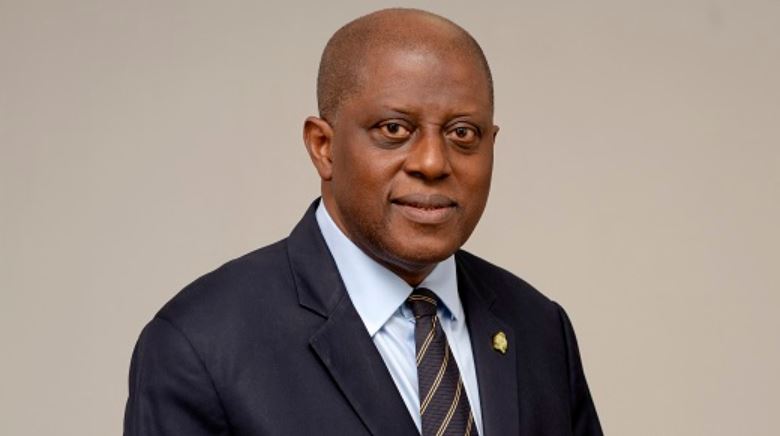
The Governor of the Central Bank of Nigeria (CBN), Olayemi Cardoso, has announced significant goals for the country’s financial sector, urging banks, fintech companies, and payment service operators to focus on decreasing fraud, enhancing financial inclusion, and advancing Nigeria’s shift towards a digital economy by the year 2028.
This announcement was made during the official launch of the Payments System Vision 2028 (PSV 2028) in Abuja, a strategic initiative aimed at fortifying Nigeria’s payment ecosystem and promoting overall economic development.
Cardoso emphasized that stakeholders in the financial system should aim to reduce fraud-related losses to below 0.001 percent of total transactions by 2028.
According to him, advances in technology, stronger identity management systems and improved fraud monitoring tools should make digital transactions safer than holding physical cash.
“By 2028, we must commit to cutting fraud losses to less than 0.001% of all transactions. With NIMC, BVN linkage, and AI fraud detection, people’s money must be safer in the digital system than under their mattress,” Cardoso said.
He noted that the rapid growth of electronic transactions in Nigeria demonstrates the country’s capacity to build a world-class digital payments ecosystem.
“Last year alone, Nigerians moved trillions electronically. This is the power of our people when given the right tools. Vision 2028 is not a government project. It is a Nigerian project. Together, we will build a payments system that is fast, inclusive, secure and proudly Nigerian,” he stated.
Cardoso stressed that the ultimate goal of the payments vision extends beyond technology and financial transactions. He said the initiative is intended to improve the lives of ordinary Nigerians, reduce poverty and contribute to national economic growth.
“The journey is to impact the lives of the poor. The journey is to lift people out of poverty and the journey is to have an impact on GDP,” he said.
The CBN governor pointed to the achievements of the Nigerian Inter-Bank Settlement System (NIBSS), which currently processes millions of instant payments daily, with most transactions completed in less than 10 seconds.
Building on that progress, he said the target for 2028 is to ensure that every Nigerian, regardless of location, can send and receive money almost instantly.
“Every Nigerian from Maiduguri to Brass will send and receive money faster than they can blink,” he said.
Cardoso also unveiled a major financial inclusion target, saying he wants at least 95 per cent of Nigeria’s adult population to have access to financial services by 2028.
He explained that achieving the target would bring millions of people who currently remain outside the formal financial system into banking and digital financial services.
“In 2023, a very large number of Nigerian adults had access to financial services. Under Vision 2028, I would like to see this reaching 95% inclusion. That means 50 million more market women, farmers, and young people will have a bank account or wallet in their name with their name and BVN protecting them,” he said.
The governor called for greater efforts to build public confidence in digital payment systems and reduce reliance on cash transactions.
According to him, cash should no longer dominate economic activities, especially as digital payment channels become more secure and accessible.
“We need to do a lot more work to build trust and to ensure that people have no doubt that they are dealing with a strong and reliable payments system,” Cardoso said.
He added that the CBN would like to see the amount of cash circulating outside the banking system reduced to less than 40 per cent of total money in circulation by 2028.
As part of efforts to expand digital payments nationwide, Cardoso said the vision aims to deploy 10 million Quick Response (QR) codes and expand tap-to-phone payment technology across markets, motor parks and farming communities.
“With 10 million QR codes and tap-to-phone at every market, bus park, and farm gate, Nigerians will pay digitally, safely, and cheaply,” he said.
The governor stressed the importance of measurable outcomes, warning that progress would be determined by results rather than policy statements.
“It’s okay for us to have these lovely clichés and lovely words. But if we’re not going to measure performance, then we will lose track,” he said.
Cardoso described payment infrastructure as a critical pillar of national development, comparing it to physical infrastructure such as roads, schools and hospitals.
“As the Federal Government builds roads, schools and hospitals, we here must also build the invisible roads that move money. That is why Nigeria’s Payments System Vision 2028 is critical to our national prosperity,” he said.
He observed that Nigeria has already established itself as one of Africa’s leading digital payment markets and among the most dynamic payment ecosystems globally.
According to him, strengthening the payments system would help formalise economic activities, expand financial access, attract investment, support trade and enhance Nigeria’s competitiveness in regional and global markets.
Cardoso said Nigeria possesses the scale, talent, entrepreneurial capacity and institutional foundations needed to build on existing achievements, while PSV 2028 provides the roadmap for translating those strengths into long-term economic value.
He assured stakeholders that the CBN would continue to provide leadership and an enabling environment for innovation while maintaining financial stability and effective regulation.
“The success of PSV 2028 will not be measured by the quality of this document. It will be measured by execution, by our ability to expand opportunity, strengthen trust, lower barriers to participation and build a payments ecosystem that serves every Nigerian and supports the ambitions of our economy,” he said.
The governor called for sustained collaboration among government agencies, banks, fintech firms, technology providers, development partners, academic institutions and payment service users.
He noted that countries that invest in resilient, trusted and future-oriented financial infrastructure will be better positioned to succeed in an increasingly digital global economy.




The Economist Magazine Predicts Winner of Nigeria’s 2027 Election

BREAKING: Atiku, Peter Obi Finally Take Decision on Single Ticket Ahead 2027

BREAKING: Monday October 5, 2026 Declared Public Holiday

BREAKING: Naira Hits ₦1,767 as New Exchange Rate Emerges

Nigerians Rush to Buy as NNPC Announces New Petrol Prices Nationwide

Dollar Crashes as Exchange Rate Emerges Today, October 1, 2026

NDC Chairman Assassinated as Details Emerge

BREAKING: Court Announces Fresh APC Primary Election

BREAKING: FG Proposes 24-Hour Electricity Supply for 5 Major States (FULL LIST)
Workers Fix Date For Nationwide Strike Over Petrol Price, Wage Award