
Spotlights
Expert Predicts Naira Exchange Rate in 2026

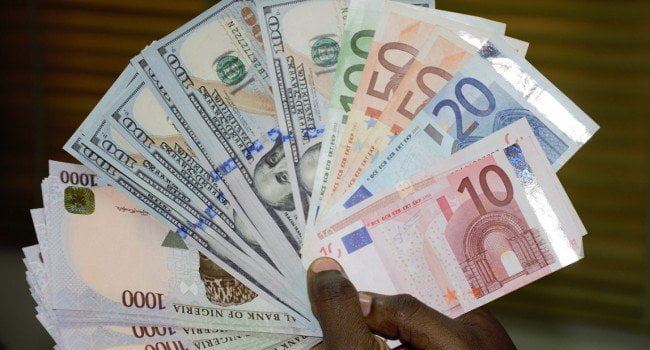
Naira is expected to remain under pressure against the United States dollar in 2026, with outcomes ranging from moderate depreciation to a worst-case scenario of further weakening, as reported by Nairametrics.
This is according to Economist, Yemi Kale, who was the keynote speaker at the FirstBank Nigeria Economic Outlook 2026.
BREAKING: Dollar to Naira Exchange Rate today, January 7, 2026
His report outlines three scenario-based forecasts for the USD/NGN exchange rate, reflecting varying assumptions around oil prices, foreign-exchange (FX) inflows, inflation trends, and policy consistency.
What the outlook is saying
Under the baseline scenario, the naira is projected to trade around N1,350–N1,450 per dollar by the end of 2026.
According to the outlook, key assumptions include moderate improvement in Nigeria’s FX reserves and oil export revenues, relative stability in FX policy by the Central Bank of Nigeria (CBN), gradual decline in inflation, and the absence of major external shocks, such as a sharp oil price collapse or a global dollar surge.
It is projected that by June 2026, Naira will trade at approximately N1,313 to the dollar, and around N1,340 by December 2026.
The outlook notes that currency risks remain elevated, justifying a cautious baseline forecast rather than expectations of strong appreciation.
It noted that the naira would remain under pressure but avoid a sharp collapse, pointing to moderate depreciation or a mild recovery from weaker levels.
Optimistic scenario: Naira strengthens to N1,200–N1,300
In a more positive outlook, the naira could strengthen to between N1,200 and N1,300 per dollar by the end of 2026.
Key assumptions include strong oil price recovery or successful export diversification, effective FX reforms by the CBN, improved liquidity, and narrower gaps between official and parallel markets, and significant decline in inflation, restoring investor confidence.
Why this could happen
Increased FX inflows from oil, gas, remittances, and non-oil exports
A weaker global US dollar, which would support emerging-market currencies.
According to the outlook, even at N1,200, the naira would remain significantly weaker than historical benchmarks, underscoring persistent structural challenges.
Pessimistic scenario: Naira slides beyond N1,650
The worst-case scenario projects the naira weakening to N1,550–N1,650 or beyond by the end of 2026.
Key assumptions are weak oil prices or production disruptions reducing FX inflows, deepening FX liquidity crisis and forced currency devaluation, and rising inflation, widening fiscal deficits, and erosion of investor confidence
While extreme, the scenario remains plausible given Nigeria’s structural vulnerabilities, including import dependence, FX mismatches, and inflationary pressures.
External reserves and balance of payments outlook
The outlook projects a gradual rebuild of Nigeria’s external reserves toward $45 billion by 2027, driven by higher remittance inflows, improved oil receipts, and portfolio investment re-entries.
Policy consistency, particularly transparent FX management and fiscal discipline, is identified as critical to sustaining investor confidence and strengthening Nigeria’s balance-of-payments position.
Local refining capacity is also reducing reliance on petroleum imports, saving billions of dollars in FX annually, while export growth in agriculture, manufacturing, and services under the AfCFTA is expanding Nigeria’s non-oil FX base.
Debt sustainability and market access
Nigeria’s debt-to-GDP ratio is expected to stabilise at around 40% through 2027, supported by domestic financing and extended maturities.
However, the report highlights affordability concerns, noting that the interest-to-revenue ratio exceeds 70%, reflecting fiscal stress despite stable headline debt levels.
Liability management strategies are helping smooth maturities and reduce rollover risks, while Eurobond market re-entry is expected to remain selective and price-sensitive.
Borrowing priorities are shifting toward growth-enhancing investments, particularly infrastructure, energy, and productivity-driven projects.
Strategic outlook and key takeaway
The report notes that the refining transformation, alongside renewable energy investments, is repositioning hydrocarbons as both a growth driver and a macroeconomic stabiliser.
“Volumes are rising, losses are falling, and Nigeria is turning its energy corridor from a pressure point into a macro stabilizer.”
It however noted that structural challenges, including infrastructure gaps, energy constraints, skills mismatch, security and governance risks, remain persistent.




Troubled 2026 FIFA World Cup Looms

List of Countries That Have Boycotted FIFA World Cup

No More FIFA World Cup for Iran

Naira Records Fresh Loss Against Dollar

Miyetti Allah Reacts to US Terror Allegations, Issues Strong Warning

‘No More N774’ – Dangote Increases Petrol Price

BREAKING: Tension in Israel as Iran’s Ballistic Missile Hits Netanyahu’s Office

2027: Names of Governors Plotting to Hijack 11th National Assembly EXPOSED!

US Military Fighter Jet Crashes as War Widens

El-Rufai in Fresh Storm After Security Agents Uncover ‘Critical Gadgets’
