
Business
Unstable Naira Rises Again as New Rate Emerges Today

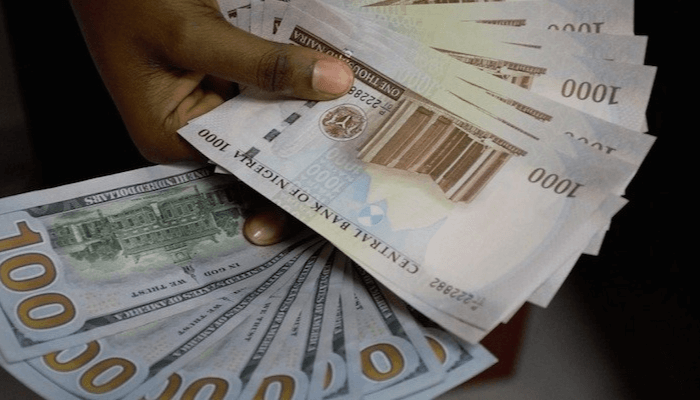
The Naira yesterday appreciated to N1,382 per dollar in the parallel market from N1,391 per dollar on Wednesday.
However, the naira depreciated to N1,361 per dollar in the Nigerian Foreign Exchange Market, NFEM. Data from the Central Bank of Nigeria, CBN, showed that the indicative exchange rate for the naira rose to N1,361 per dollar from N1,359.5 per dollar on Wednesday, reflecting N1.5 depreciation for the naira.
Consequently, the margin between the parallel and official markets narrowed to N21 per dollar from N31.5 per dollar on Wednesday.

Meanwhile, the Nigerian Naira maintained a firm standing against the US Dollar on Friday, February 27, 2026, closing the trading week on a positive note. Real-time data from the Nigerian Foreign Exchange Market (NFEM) and various parallel market channels show the currency holding steady, bolstered by a significant surge in the country’s external buffers and a recent strategic shift in monetary policy.
Official Market Performance (NFEM)
In the official NFEM window, the Naira opened at 1,355.25 per dollar. Market activity remained relatively calm throughout the morning session, with the rate appreciating slightly to 1,353.97 by 2:30 AM WAT. This stability follows a mid-week mean rate of approximately 1,356.97, indicating that the local currency is successfully resisting further depreciation despite global market pressures.

The current trading band is a direct result of improved liquidity within the banking system. Authorized dealers report a consistent flow of foreign exchange, which has allowed the market to absorb demand for dividends and import financing without the drastic price spikes seen in previous years.
Parallel Market Trends
The parallel market continues to show a remarkable level of convergence with the official window. In informal trading hubs across Lagos, Abuja, and Kano, the dollar is being exchanged at rates between 1,358 and 1,368 per dollar.
The spread between the two markets has remained consistently narrow, often staying within a 1% to 1.5% margin. Financial analysts attribute this to the Central Bank of Nigeria’s (CBN) successful integration of Bureau De Change (BDC) operators into the formal supply chain, which has effectively marginalized speculative “black market” activities and anchored retail expectations.




BREAKING: Police Release Arrested Osun SSG, Igbalaye

Ex-Finance Minister is Dead; Details Emerge

Redeemer’s University Announces Fresh School Fees (FULL LIST)

Tension as Gunmen Abduct Eight Ogun Poly Students (PHOTO)
Popular Nigerian Daddy GO Dies, Church Reacts (PHOTO)

INEC Breaks Silence on Alleged Changes to 2027 Campaign Timetable

2027: Why Ogun Will Choose Yayi As Governor – Odufowokan

Senator Yayi Empowers 3,000 Ogun Traders with Fresh Business Grants

Nigeria’s Ambassador to Côte d’Ivoire Nwaobiala Congratulates Joseph Onah on FG’s National Diaspora Merit Award
![Petrol Price Rises Again [See Fuel Price Per Litre Nationwide]](https://thepapers.ng/wp-content/uploads/2023/08/fuel-pump2-80x80.webp)
Marketers Slash Petrol Prices as New Rate Emerges
