
Business
Naira Falls To New Rate, Lowest Level Since October

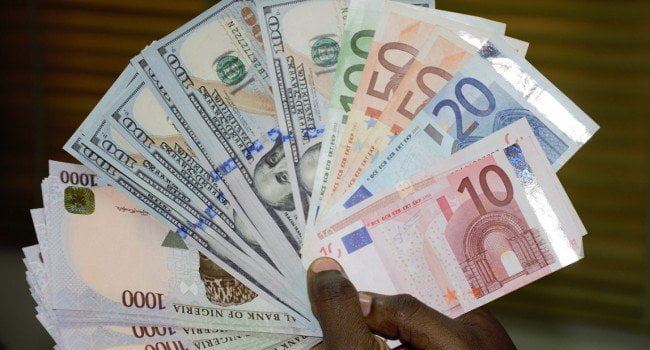
The naira closed the trading week on a weaker note at N1,466.5/$1 on Friday at the official foreign exchange market, extending a steady depreciation recorded throughout the week, according to Nairametric.
Data from the Central Bank of Nigeria’s (CBN) website show that the currency weakened across five consecutive trading sessions, reflecting renewed pressure in the FX market.
Friday’s closing rate represents a level not seen since October 21, 2025, when the naira closed at N1,464.5/$1, highlighting the return of volatility after a period of relative stability.

Available trading data show a gradual but consistent slide in the naira’s value over the week:
Monday: N1,454/$1
Tuesday: N1,457/$1
Wednesday: N1,458.02/$1
Thursday: N1,462.9/$1
Friday: N1,466.5/$1
On a week-on-week basis, the naira also weakened when compared to the previous trading cycle.

Nairametrics reports that the currency closed last week at N1,455.50/$1, depreciating further from Thursday’s closing rate of N1,455.25/$1.
The steady decline suggests persistent demand for foreign exchange, despite ongoing reforms and market interventions by the CBN.
The naira’s depreciation coincided with a major fiscal development, as President Bola Tinubu on Friday presented the 2026 Appropriation Bill to the National Assembly.
The president described the 2026 budget assumptions as conservative, with key projections including:
$64.85 per barrel oil price
1.84 million barrels per day crude oil production
N1,400/$ exchange rate
The President stressed strict budget discipline, saying key economic officials have been directed to adhere closely to approved spending details and timelines.
The budget’s exchange rate assumption is notably stronger than the current official market rate.
This demonstrates the disconnect between fiscal projections and prevailing FX market realities.
Analysts attribute the gap to concerns over FX supply sustainability and oil output risks.
President Tinubu presented the 2026 budget without releasing the 2025 performance report, raising concerns over transparency and accountability.
The concern is compounded by what analysts describe as Nigeria’s highly irregular practice of effectively running multiple budgets at the same time.
Market watchers say the divergence between the budget’s assumed exchange rate and the prevailing market rate could influence sentiment in the weeks ahead.
If crude oil production targets or external inflows fall short, pressure on the naira may persist.
However, improvements in FX liquidity, stronger oil earnings, or increased portfolio inflows could help stabilise the currency.
The naira’s latest close reinforces concerns about short-term volatility, as the market weighs fiscal signals from the 2026 budget alongside broader macroeconomic conditions and FX market dynamics.




‘Obi Betrayed Me’ — Kenneth Okonkwo Reveals Why He Chooses to Work With Atiku

Dangote Announces Petrol Price Reduction Again

2027: ADC Wins Key Legal Battle

Cooking Gas Prices Crashes in Nationwide; New Rate Emerges

EFCC Declares Olusegun Ola Osinkolu Wanted

APC Finally Announces Governorship Candidate in Oyo (PHOTO)

Jubilation as Tinubu Slashes Import Duties On Rice, Vehicles (Full List)

CBN Shuts Down 46 Microfinance Banks Nationwide (FULL LIST)

Tinubu’s Ex-Minister Arrested (PHOTO)

APC Replaces 25 Candidates from Party’s Final List
