
Spotlights
Inside Dirty Lagos: How Refuse is Choking Mega City

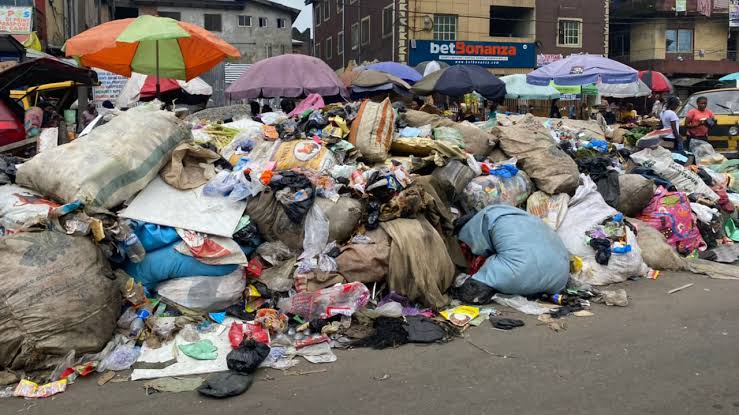
By any measure, Lagos is a city of extremes — wealth and want, ambition and abandonment, order and chaos. Nowhere is this contrast more visible than in its growing refuse crisis, where heaps of uncollected waste have become a defining feature of daily life across many neighbourhoods. David Moore provides an analysis of the sanitation challenges currently facing the state.
From the crowded streets of Mushin and Ajegunle to parts of Surulere, Agege, and even upscale areas after heavy rainfall, refuse now spills onto roads, blocks drainage, and competes with traffic for space.
Plastic bottles, food waste, nylon bags, broken furniture, and construction debris form towering piles that emit stench and invite rodents. In Africa’s most populous city, dirt has become both a public nuisance and a public health threat.
Residents say the problem is no longer occasional — it is constant.
“Once the rain starts, the gutters overflow because they are already blocked with waste,” said a trader in Oshodi. “The refuse moves from the corners into the streets, then into our shops and houses.”
At the heart of the crisis is Lagos’ struggle to manage the waste generated by its more than 20 million residents. The city produces thousands of tonnes of waste daily, overwhelming an already stretched waste management system.
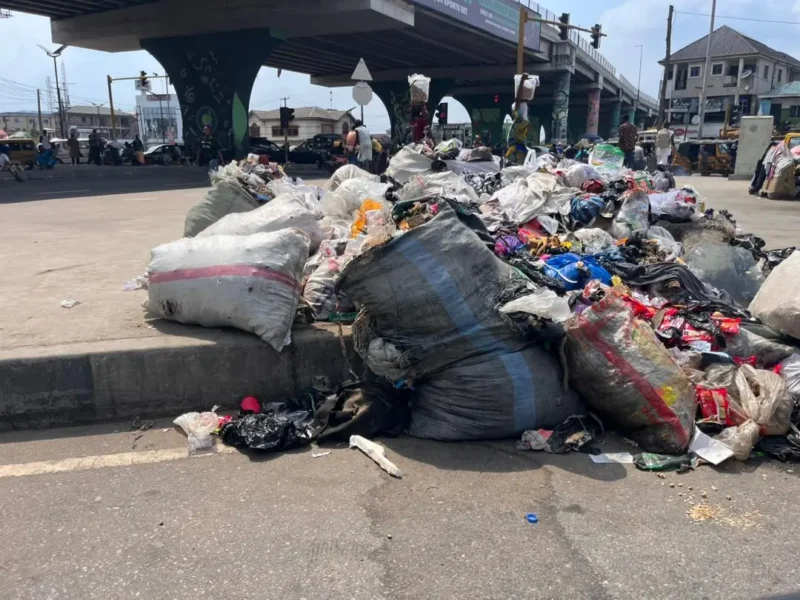
A Lagos road with portions of dirt
While the Lagos State Waste Management Authority (LAWMA) has repeatedly rolled out reforms, private sector participation, and enforcement drives, many residents argue that collection remains irregular and uneven.
In some communities, refuse collection trucks reportedly fail to show up for weeks. In others, residents complain of rising fees charged by private operators, pushing households to dump waste illegally at night or into drainage channels.
“When people can’t afford the fees, they dump refuse anywhere,” said a community leader in Agege. “It becomes everyone’s problem.”
The environmental consequences are severe. Blocked drainages worsen flooding during the rainy season, destroying homes, displacing families, and damaging small businesses. Floodwaters often mix with refuse and sewage, increasing the risk of waterborne diseases such as cholera, typhoid, and dysentery.
Public health experts warn that the refuse crisis is not just about aesthetics.
“Poor waste management directly impacts disease spread, air quality, and mental well-being,” said a Lagos-based environmental health practitioner. “Open dumps attract mosquitoes and rodents, while burning refuse releases toxic fumes.”
Ironically, the refuse problem is no longer confined to low-income areas. In recent years, waste has crept into prominent districts and major roads, especially after rainfall. Motorists on busy routes like Ikorodu Road and parts of the Island have encountered floating debris and blocked drains, exposing the city’s vulnerability.
Government officials often blame residents for indiscriminate dumping, while residents blame weak enforcement and poor service delivery. Environmental activists argue that both sides share responsibility.
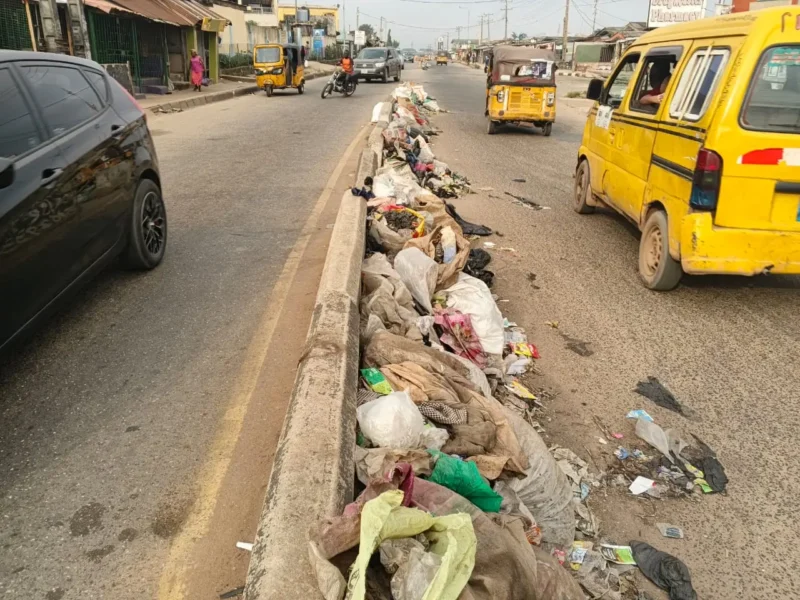
Another Lagos road where dirtiness becomes norms
“Lagos cannot find its way out of this crisis,” said an environmental advocate. “There must be consistent collection, public education, recycling incentives, and infrastructure investment.”
Despite the grim picture, solutions exist. Experts point to waste sorting at source, expansion of recycling programs, improved landfill management, and stronger partnerships with community leaders. Public awareness campaigns, they say, must move beyond slogans and focus on sustained behavioral change.
For now, however, refuse remains an unflattering mirror of Lagos’ rapid urban growth — a reminder that infrastructure has not kept pace with population and consumption. As the rains intensify and the city continues to expand, the question grows louder: can Lagos clean up before dirt and flooding overwhelm it completely?
Until then, residents continue to live with the consequences — navigating flooded streets, breathing polluted air, and hoping that one day, Africa’s megacity will match its global ambitions with a cleaner, healthier environment.




BREAKING: Is Netanyahu Dead? Tension as Truth Emerges

BREAKING: Popular Ex-Super Eagles Midfielder Dies; Causes of Death Revealed

Govt Announces Eid Al-Fitr Public Holiday Dates

10 States to Watch Out for ADC in 2027 Elections

Tragedy as Plane Crashes in Shocking Incident, Details Emerge

Dollar to Naira Exchange Rate Today, March 12, 2026

9 Top Senators Join ADC in Massive Defection (FULL LIST)
2027: 11 House of Rep Members Defect to ADC, Other

Tambuwal Dumps PDP, Defects to Another Party

Tinubu Makes Fresh CBN Appointment Amid Naira Crash
