
News
Delta Unveils N1.7 Trillion 2026 Budget, Prioritises Capital Devt, Social Protection

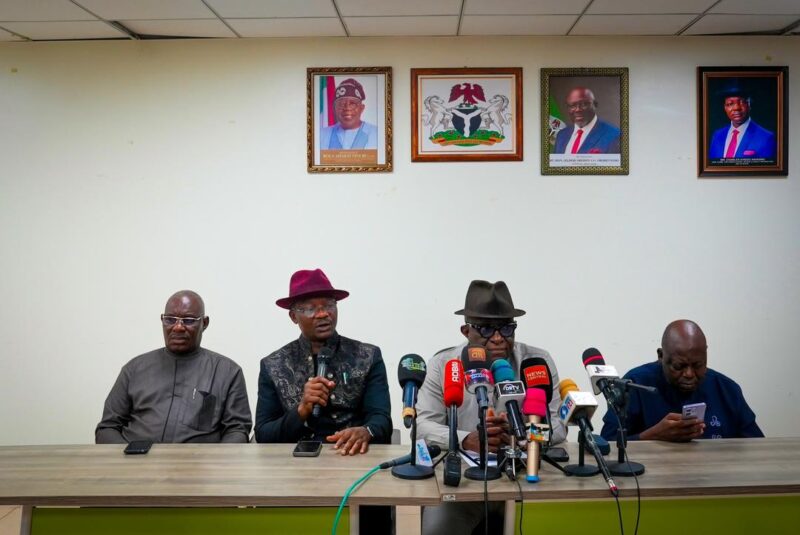
The Delta State Government has unveiled details of its 2026 Appropriation Law, with a total budget size of about N1.7 trillion, committing over 70 per cent to capital expenditure in a renewed push to deepen infrastructure development and social investment across the state.
Briefing journalists in Asaba, the Commissioner for Economic Planning, Mr. Sunny Ekedayen, said the 2026 budget, recently passed by the Delta State House of Assembly and assented to by Governor Sheriff Oborevwori, represents a major leap from the 2025 budget of N979 billion.
Ekedayen explained that the original estimate of N1.664 trillion sent to the House was subject to legislative review, which resulted in marginal adjustments that ultimately served the best interest of the state.
He noted that the budget, now a legal and “live” document, would take effect from January 1, 2026.
“The most significant aspect of this budget is the strong tilt towards capital expenditure. For the first time, Delta State is prioritising capital projects to the tune of over N1.165 trillion, representing at least 70 per cent of the total budget,” he said.
He described the development as historic, noting that the capital component of the 2026 budget is even larger than the entire 2025 budget, a move he said would accelerate development across the state’s 25 local government areas.
The Commissioner, who was accompanied by the Commissioner for Works (Rural Roads) and Public Information, Mr. Charles Aniagwu; the Executive Assistant to the Governor on Public Enlightenment, Projects and Policies, Mr. Olisa Ifeajika; and the Executive Assistant on Media, Mr. Felix Ofou, said the administration was determined to “hit the ground running” from the first day of 2026.
According to him, ongoing projects would be completed without abandonment, while new ones would be carefully selected for maximum impact.
He disclosed that contractors are usually mobilised up to 40 per cent to ensure timely delivery, especially given the state’s relatively short construction season.
Ekedayen said social protection would receive special attention in 2026, with about N20 billion earmarked for programmes designed to support artisans, small traders, vulnerable groups and small and medium-scale enterprises through cash and in-kind interventions.
He added that a Social Protection Bill had been sent to institutionalise the programme and provide a clear framework for its implementation.
On infrastructure, he stressed that development would be evenly spread across the state’s multiple towns and cities, noting that Delta’s unique settlement pattern requires resources to be distributed across several urban and rural centres rather than concentrated in one location.
He also revealed that the state government had set aside N100 billion for targeted interventions in local governments to address special community needs, based on requests from grassroots stakeholders.
In the health sector, Ekedayen highlighted significant investments in tertiary healthcare facilities, including the procurement of high-end diagnostic equipment from Germany for three state-owned tertiary hospitals.
He said plans were also underway to expand medical education and strengthen primary healthcare, alongside the recruitment of additional healthcare professionals and sustained support for the state’s health insurance scheme.
Education, he said, remains a priority, with continued investment in state-owned universities, polytechnics, colleges of education, nursing and health technology, as well as hundreds of primary and secondary schools across the state.
He described Delta as an emerging education hub, citing improvements in infrastructure and learning environments.
Agriculture is also expected to play a key role in the 2026 budget, with a three-pronged strategy involving direct government funding, private sector partnerships and large-scale agribusiness initiatives aimed at boosting food production, creating jobs and reducing post-harvest losses.
He disclosed that the state is also favourably positioned to benefit from the second batch of the Federal Government’s Special Agro-Industrial Processing Zones initiative.
On revenue, Ekedayen said Delta State’s Internally Generated Revenue (IGR) had grown by over 140 per cent since 2023, rising from N83 billion to over N200 billion, with a target of at least N250 billion in the coming year.
He attributed the growth to improved efficiency rather than increased tax burden on residents.
He further disclosed that the state is pursuing revenue diversification through innovative initiatives such as the blue carbon market, leveraging mangrove restoration and climate finance in partnership with international firms and the Federal Government.
Ekedayen described Governor Oborevwori as a practical and experienced leader focused on leaving a lasting legacy, assuring Deltans that every community would feel the impact of governance in the coming year.
“From January 1, 2026, government machinery will be fully in motion. Development will deepen, projects will be reinforced, and every part of the state will witness tangible progress,” he said.




VIDEO: Drama as Military Exchange Blows During Tinubu’s Visit to Bayelsa

2027: Tinubu’s Ally Reveals Who Will Be Lagos’ Next Governor

SAD END: Another Lawmaker Dies After Brief Illness

ADC Plots Next Move as David Mark Holds Secret Meeting with Leaders of New Party

APC Pioneer Chairman Resigns from Party; Gives Reason

Ganduje Can’t Give Me Orders – APC Governor Takes Stand

Akpabio’s Daughter Gets Political Appointment

N3.6 Billion Laundering: EFCC Refuses to Back Down on Omatsuli Case

24 Dead, Worship Centres Destroyed in Deadly Assault in Kebbi – Catholic Diocese

Union Bank: How Controversial Transactions Led to CBN Takeover
