
Spotlights
SEE LIST: New COVID-19 variant confirms in 29 countries

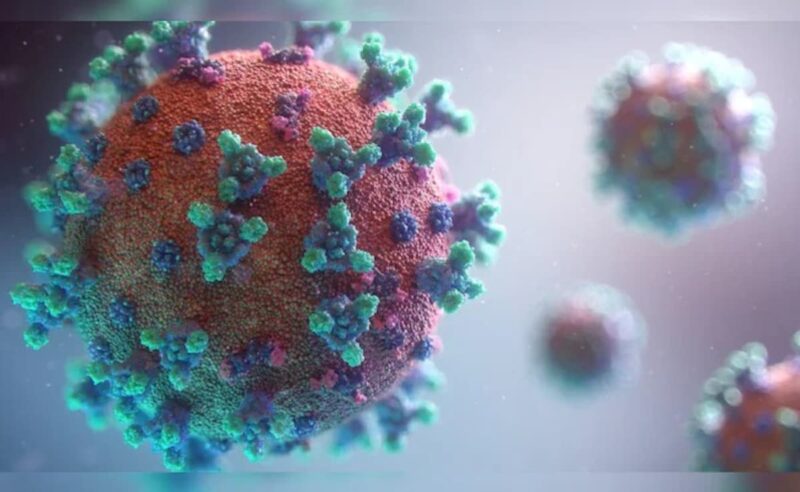
The Federal Ministry of Health and Social Welfare has issued a statement advising Nigerians against the newly detected COVID-19 variant XEC, which has spread to 29 countries globally.
The ministry, however, noted that there is currently no evidence of the XEC variant in Nigeria.
The ministry, in a statement by the Director Information and Public Relations, Alaba Balogun, said XEC variant “has shown a growth advantage over other circulating strains, raising concerns about its potential impact on public health.”
The ministry therefore advised the general public not to panic but to continue observing universal precautions, including regular hand washing, adding that the government has also stepped up surveillance at all entry points to Nigeria.
The statement further noted that the government has upgraded federal tertiary hospitals by establishing molecular laboratories, isolation centres, and intensive care units equipped with ventilators.
The ministry, however, advised the public to disregard a letter circulating on social media about the resurgence of COVID-19 in Nigeria, saying it contains misinformation.
Nigerians are advised to go about their normal business while maintaining caution and adhering to public health guidelines.
Earlier, ChannelsTv reported that the Federal Government had clarified that the newly detected XEC COVID-19 variant, identified in Australia and several European countries, has not been detected in Nigeria.
According to the ministry’s Permanent Secretary, Kachollum Daju, a recently leaked letter addressed to the Committee of Chief Medical Directors and Medical Directors was precautionary and not intended to cause panic.
She noted that the XEC COVID-19 variant has been detected in 29 countries, and that due to the festive season, when travelers arrive from various parts of the world, it is crucial for hospitals to implement measures to ensure the country is not caught off guard.
In the letter dated 5 December, the ministry urged health authorities to activate heightened alert systems across hospitals and maintain a high index of suspicion for patients with COVID-like symptoms.
The letter emphasised the need for vigilance and immediate action, stating that “Alert systems should be immediately activated throughout our hospitals for high index of suspicion in patients with COVID-like symptoms.”
XEC COVID-19 variant
The XEC COVID-19 variant is a newly detected strain of the SARS-CoV-2 virus, which has been reported in several countries, including Australia and various European nations.
According to the World Health Organisation (WHO), the XEC variant has been identified in 29 countries worldwide.
The XEC variant has several characteristics that have raised concerns among health authorities.
It has shown increased transmissibility, indicating that it may be more contagious than other circulating strains.
Additionally, the variant contains several mutations in the spike protein, which may affect the virus’s ability to infect cells and evade the immune system.
However, there is currently limited information on the severity of illness caused by the XEC variant, and it is essential to note that the variant’s transmissibility does not necessarily correlate with its severity.
In response to the emergence of the XEC variant, health authorities worldwide are taking several measures.
Enhanced surveillance is being implemented to detect and track the spread of the variant.
Some countries have also implemented travel restrictions to slow the spread of the variant. Furthermore, the WHO and national health authorities are emphasising the importance of vaccination in preventing the spread of COVID-19, including the XEC variant.
Currently, the US has reported 118 XEC cases, the highest globally. Germany has 92 XEC cases, the UK has 82, Canada has 77, and Denmark has 61 cases according to media reports but actual figures are likely to be higher in nations that do not regularly sequence COVID samples.
In Europe and North America, the dominant variant is KP.3.1.1, while Asia is primarily affected by the closely related KP.3.3 variant.
XEC has not been reported from any African country, but experts suggest that the strain is likely to become the dominant variant globally in the next few months.
Compared to other strains, XEC is said to have a higher growth advantage, spreading much more rapidly than the others.
Experts said XEC has this advantage because of its relatively rare T22N mutation (inherited from KS.1.1) combined with Q493E (from KP.3.3) in the spike protein.
The spike protein is said to play a crucial role in helping the virus attach to human cells, allowing it to enter and begin replication.
Premium Times




Speaker of House of Assembly is Dead

ADC Plots Big Move for 2027, Three Key Options Revealed

FULL LIST: 4 Tinubu’s Ministers Step Down

Petrol Prices Crash Across Depots as Marketers Import Fuel

Good News: Tinubu Makes Major Move to Solve Electricity Crisis

President Appoints Son as Vice president, Head of Armed Forces

INEC Finally Exposes How ADC Violated Electoral Act

Six Killed in Easter Church Attack, Army Rescues 31 Abducted Villagers

ADC Secretary Resigns; Gives Reason

Dollar To Naira Exchange Rate Today, April 6, 2026
