
News
How to stay safe during April 8 solar eclipse

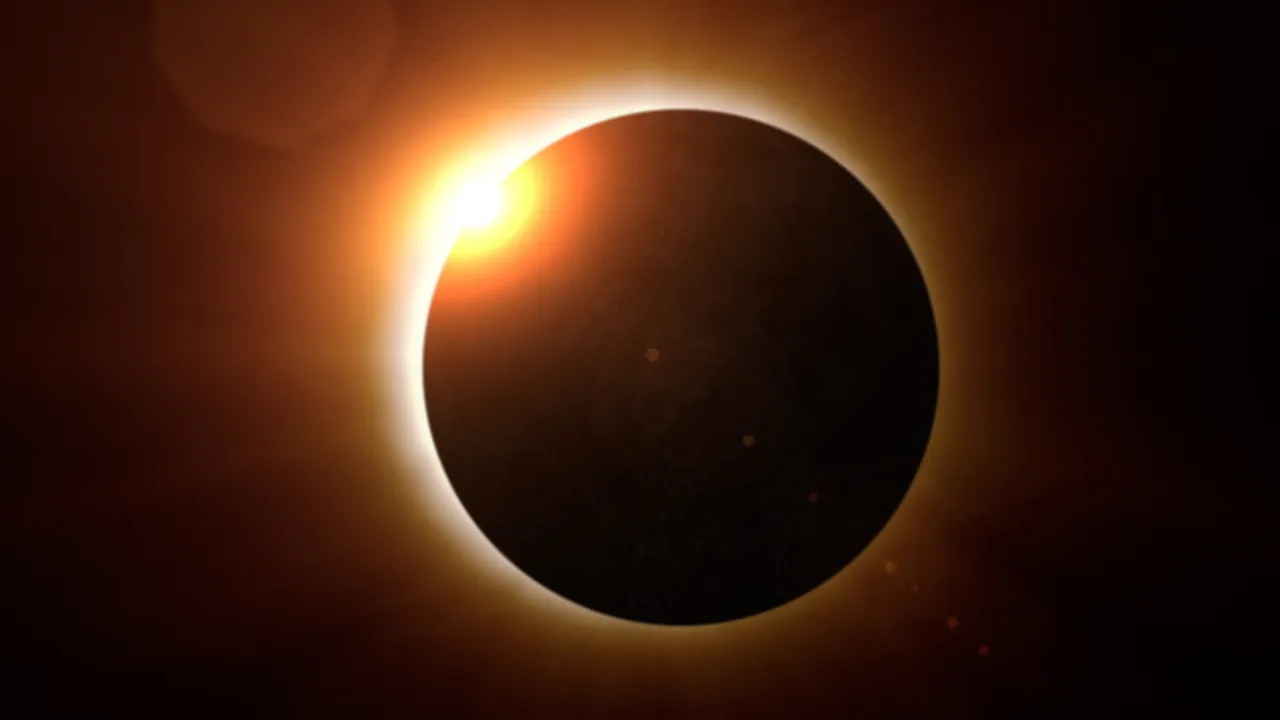
Everyone in the U.S. will see at least a partial solar eclipse, but only those within the 115-mile-wide (185 kilometers) path of totality will witness the sun’s face completely blocked by the moon’s shadow for up to 4 minutes, 28 seconds.
Only during totality — when the sun’s face is completely blocked — is it safe to look at the totally eclipsed sun’s corona with the naked eye. At all other times, including during the partial phase of the eclipse, you must wear certified solar eclipse glasses to view the sun.
1. GET CERTIFIED ECLIPSE GLASSES AHEAD OF THE EVENT
Make sure you grab yourself a pair of solar eclipse glasses for viewing the eclipse. (Image credit: LeoPatrizi / Getty Images)
Solar eclipse glasses are plentiful and inexpensive. Buy them before stocks run low, and get them only from this list of verified suppliers of safe solar filters and viewers on the American Astronomical Society’s AAS Solar Eclipse Task Force website. Only then can you be sure that they comply with the ISO 12312-2 international standard, which means they reduce visible sunlight to safe and comfortable levels and block all but a tiny fraction of solar UV and IR radiation.
2. KNOW WHEN TO USE SOLAR ECLIPSE GLASSES
Solar eclipse glasses must be used to look at the sun, only during the brief moment of totality when the moon fully obscures the sun can you remove them. (Image credit: Crimson Cat Studios via Getty Images)
You can use solar eclipse glasses to look at the sun anytime. Typically, however, solar eclipse glasses are used to view the sun from the moment the moon starts to cross it — a time known as first contact. You must use solar eclipse glasses to look at the eclipse whenever the sun is only partially covered, which is the entire time on April 8 for most of North America.
3. PREPARE FOR BACKCOUNTRY TRAVEL
Although the path of totality on April 8 will include several major cities and metropolitan areas, it crosses a lot of backcountry. Many people will chase clear skies, which could take them to areas they hadn’t planned on visiting. Remote parts of Texas, Arkansas, Missouri, New York, Vermont, New Hampshire and Maine, in particular, are short on facilities and gas stations. So bring everything you need, including a full fuel tank and extra food, water, cash and toilet paper.
4. PAY ATTENTION TO WEATHER AND CONDITIONS
In April, you can expect the unexpected, with everything from snow in the Northeast to tornadoes in the Midwest. In remote areas of the northeastern U.S. and Canada, the mountains, lakes and forests may provide a beautiful backdrop, but conditions in the backcountry that time of year can be difficult.
“Since visitors may not be familiar with the area’s ever-changing weather and early spring conditions, our most important role is to share important information about being safe and well-prepared and about the planned events throughout the region,” representatives from the Adirondacks’ Regional Office of Sustainable Tourism (ROOST) said in a statement.
ROOST encourages people to avoid mountain trails and waters. Read up on the climate along the eclipse track, look at weather forecasts and decide the best place to watch the eclipse the day before the event.
5. STAY SAFE IN CITIES
A women wearing solar viewing glasses reacts while looking at the sun during a solar eclipse near Columbus Circle in New York, U.S., on Monday, Aug. 21, 2017.
Take care when observing the solar eclipse from a city sidewalk. (Image credit: Peter Foley/Bloomberg via Getty Images)
If you decide to watch the eclipse from a city sidewalk — perhaps even during a lunch break at work — then watch out. Wandering into roads and other dangerous situations is easier than you might think when you’re looking through solar eclipse glasses. The best, easiest and safest eclipse-observing site is an open space or park, which will likely have a much better view of the eclipse than city streets, where buildings could easily block the view.
The biggest cities inside the path are Mazatlán and Torreón, Mexico; San Antonio, Austin and Dallas, Texas; Indianapolis, Indiana; Hamilton, Ontario; Montreal Quebec.
6. DON’T GET LOST, AND AVOID TRAFFIC JAMS
Relocating at the last minute in search of clear weather is not particularly recommended unless the roads are clear and you have multiple backup plans. An excellent way to monitor the traffic situation both before and after the eclipse is to use Google Maps or similar apps to monitor live traffic information.
However, you need to know your destination. A great way to begin your research is to use an interactive eclipse map and note the eclipse schedules for various locations in advance. Fred Espenak’s Road Atlas for the Total Solar Eclipse of 2024 and Michael Zeiler’s Field Guide to the 2023 and 2024 Solar Eclipses ensure you have a spiral-bound hard copy of the path of totality in case you lose your cellphone connection. A great option is to download the Solar Eclipse Timer App, which provides audio commentary on exactly what to expect and when to expect it and instantly tells you if you’re inside the path of totality.




(FULL LIST): 7 Ministers, Top Aides to Resign as Tinubu Issues Fresh Order

Dollar to Naira Exchange Rate Today, March 20

Fresh Panic: Netanyahu is Dead! Viral Claims Rock Israel

Security Chief Names Two States Responsible for Terrorism in Northeast

Top Electricity Company Announces 4-Month Power Outage

Dollar to Naira Exchange rate today, March 19, 2026

Full List of Ministers to Resign from Tinubu’s Cabinet

Fresh Battle as Sultan of Sokoto Challenges Tinubu over Detaining El-Rufai

VIDEO: Tinubu Calls Wike ‘Abuja Landlord’ — Nigerians React to Trending Video
Dollar to Naira Exchange Rate Today, March 18, 2026
